Welcome to Business Bites, the blog where food meets business strategy — and where every bite tells a story about what makes the biggest restaurant chains tick. If you’ve ever wondered why some brands grow from a single local spot to worldwide icons, or how your favorite fast-food chains keep millions coming back for more, you’re in the right place.
This series digs beneath the surface of menus and marketing campaigns to uncover the smart business moves that helped these chains rise to the top. From franchising and supply chain magic to digital innovation and cultural adaptation, I’ll break down the strategies that turn burgers, tacos, and chicken sandwiches into multi-billion-dollar empires. Plus, I’ll share my personal favorite menu picks to prove the food’s worth all the hype.
Each post focuses on one restaurant, exploring what makes it unique, how it grew, and the lessons it offers for anyone curious about business — whether you’re a student, a future entrepreneur, or just a foodie who loves a good story.
Today’s spotlight? The chicken chain famous for its Southern hospitality and being closed on Sundays: Chick-fil-A.
Part 2 – Chick Fil A
Whether you love the crispy chicken or the famously polite service, Chick-fil-A has built a devoted fan base — and done it without ever opening on Sundays. Behind the friendly faces and delicious sandwiches is a values-driven business model that’s quietly rewritten the fast food playbook.
The Path to a Chicken Empire
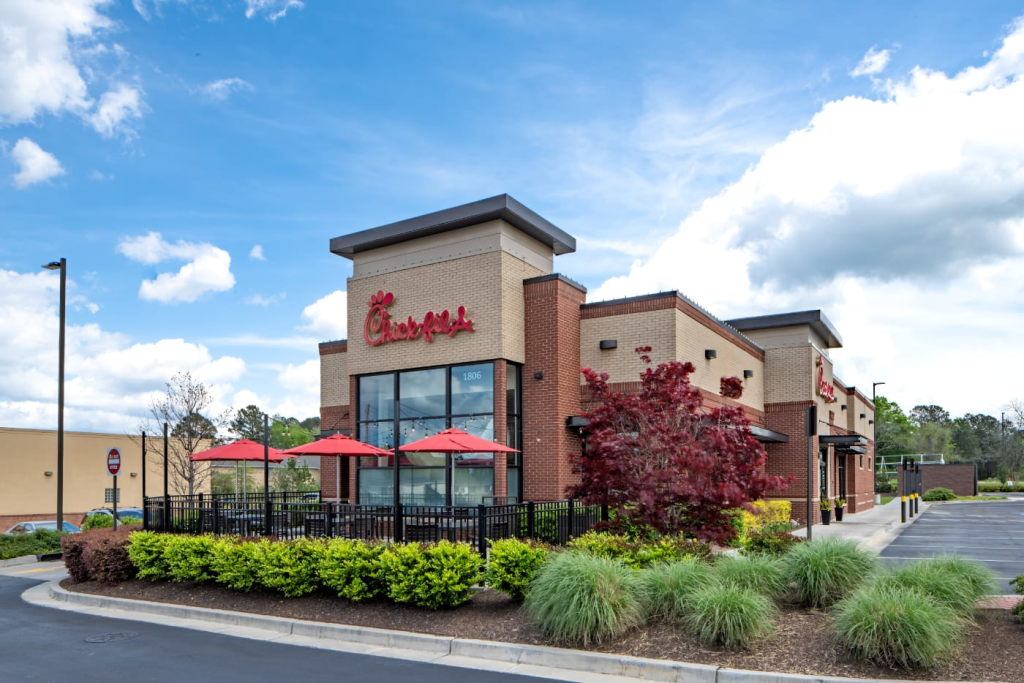
The story of Chick-fil-A begins in 1946 when founder S. Truett Cathy opened a small restaurant called The Dwarf Grill (later renamed The Dwarf House) in Hapeville, Georgia. While serving hungry factory workers, Cathy began experimenting with a new way to cook boneless chicken breast, a process that would become the cornerstone of his future success. In 1964, he perfected his recipe and introduced the first Chick-fil-A Chicken Sandwich.
Instead of immediately opening up new stand-alone restaurants, Cathy pioneered a new strategy: opening Chick-fil-A outlets inside shopping malls. This low-risk, high-traffic approach allowed the brand to build a following quickly and efficiently. The first stand-alone restaurant didn’t open until 1986. Today, Chick-fil-A has over 3,000 locations across the United States, Puerto Rico, and Canada, generating more sales per restaurant than any other fast-food chain (QSR Magazine).
The brand’s success is rooted in its founder’s vision and values, including the decision to remain closed on Sundays, a commitment to quality, and a focus on community and kindness. This unwavering dedication has earned Chick-fil-A a legendary reputation for customer service and brand integrity.
My Go To Order
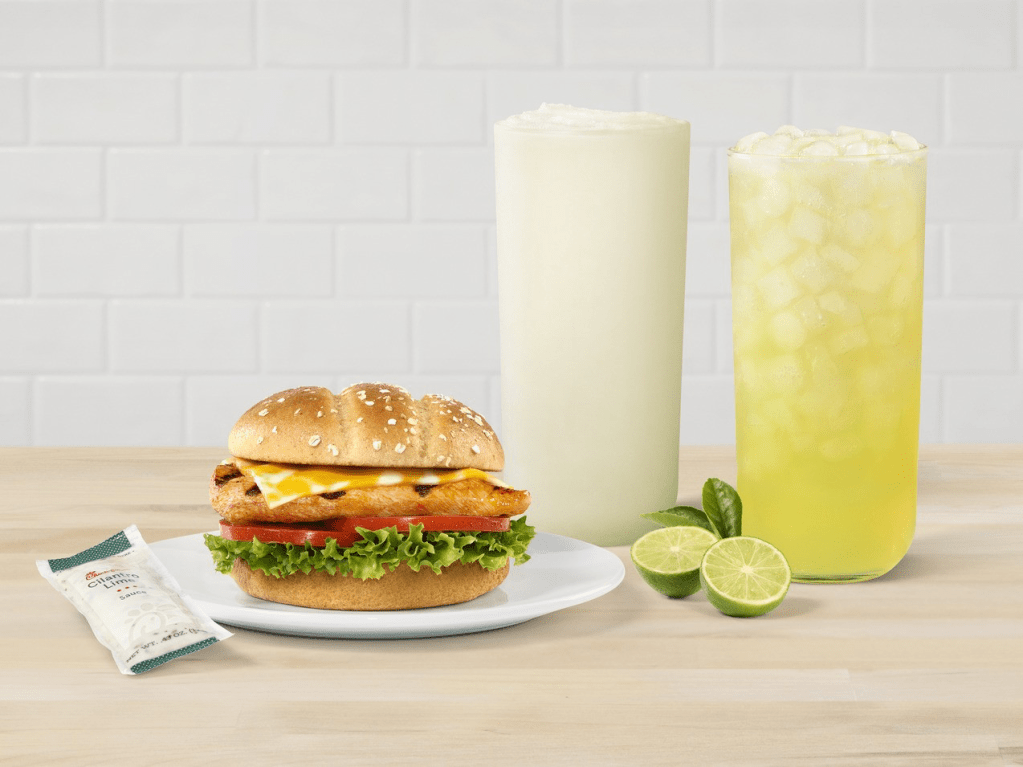
When diving into a business, you’ve got to taste the product, right? Here’s what I actually order (and recommend) at Chick-fil-A — each with its own backstory and role in the brand’s success:
- Chick-fil-A Chicken Sandwich: The original and still the best. Truett Cathy’s iconic pressure-cooked chicken sandwich is the foundation of the entire brand. It’s a simple, perfect product that proves that a single, high-quality offering can drive immense success. It’s the product that allowed Chick-fil-A to focus its entire supply chain and operations around one thing.
- Waffle Fries: More than just a side, the Waffle Fries are a signature of the Chick-fil-A experience. Their unique shape ensures they stay crisp and are perfect for dipping. This menu item helps distinguish the brand from competitors and adds to the overall memorable experience.
- Spicy Chicken Sandwich: While the original sandwich is a classic, the Spicy Chicken Sandwich caters to consumers’ growing demand for variety and heat. It’s a smart menu expansion that doesn’t stray from the brand’s core product, showing how Chick-fil-A innovates within its strengths.
- Frosted Lemonade: This delicious dessert-drink combines Chick-fil-A’s hand-squeezed lemonade with their signature Icedream. It’s an example of how the brand uses its core ingredients to create new, buzz-worthy items that drive up-sells and customer engagement.
The Business Strategies Behind the Billions
A Singular Focus: “Eat Mor Chikin”
Unlike competitors with sprawling menus, Chick-fil-A’s strategy has always been to do one thing exceptionally well: chicken. This singular focus allows for unparalleled efficiency in the kitchen, a streamlined supply chain, and a deep expertise in preparing their main product. This operational mastery is a key reason for their high per-store sales.
Values-Driven Culture & Customer Service
Chick-fil-A’s commitment to “Second-Mile Service” is legendary. The brand invests heavily in training its staff, who are known for their polite and friendly demeanor. This unique service model—and the respect shown to employees—fosters a positive work environment and builds a fiercely loyal customer base. The decision to close on Sundays is a public demonstration of its values, further strengthening its brand identity and reputation.
Controlled Franchising
While McDonald’s has a wide-open franchising model, Chick-fil-A is highly selective. The company owns all its restaurant locations, while operators pay a low initial fee of $10,000 to run a business. This allows Chick-fil-A to maintain strict control over quality, brand consistency, and the company’s culture. Operators are chosen for their character and commitment to the brand’s values, rather than just their financial resources.
Digital & Drive-Thru Innovation
Chick-fil-A has embraced technology to handle its incredible volume, especially at the drive-thru. They were one of the first chains to use employees with tablets to take orders in the line, speeding up service and reducing wait times. Their mobile app and loyalty program, Chick-fil-A One, also drive digital engagement and provide valuable data to enhance the customer experience.
Brand Loyalty Through Community Engagement
Chick-fil-A invests heavily in local communities, from scholarship programs for employees to sponsoring youth activities. These grassroots efforts create a loyal customer base that sees the brand as more than just a restaurant. For entrepreneurs, this highlights the power of embedding your business within the community — customers don’t just buy the product, they buy into the brand story.
Efficiency + Experience: Tech That Serves People
Chick-fil-A combines speed with hospitality. Its mobile app rewards frequent customers with easy ordering, while drive-thru systems use technology like iPads for curbside ordering combined with human interaction to keep service fast and friendly. By blending digital tools with personal service, Chick-fil-A elevates customer experience without losing the human touch.
Lessons From Chick Fila A for Aspiring Entreprenuers
| Strategy | What It Teaches |
|---|---|
| Singular Focus | Master one thing before expanding; quality trumps quantity |
| Values-Driven Culture | A strong culture and clear values build loyalty and trust |
| Controlled Franchising | Maintain control to protect your brand and quality |
| Digital Innovation | Use technology to enhance your core strengths, especially customer service |
Final Thoughts
Chick-fil-A’s success is a powerful lesson in the value of focus, values, and operational excellence. By perfecting its core product and building a brand around kindness and consistency, it has created a business model that is both highly profitable and deeply respected. It proves that you don’t need to be open seven days a week to dominate the fast-food industry.
Chick-fil-A is more than just chicken sandwiches — it’s a story of discipline, values, and strategic focus. By prioritizing quality over quantity, building loyalty through service, and standing by principles, it has become one of the most profitable chains in America.
Up next on Business Bites: Taco Bell — where late-night cravings meet bold flavors and marketing genius. We’ll explore how a brand built on tacos, creativity, and cultural savvy turned into a fast-food icon with global reach. Until then, keep your appetite sharp — for both food and business insights.
Want more bites of business?
Subscribe to get every new post delivered straight to your inbox — fresh insights every Friday and occasionally on Tuesdays.
Sources
 Business Bites
Leave a comment