By Sathvik Alla
Welcome to Business Bites, the blog where food meets business strategy, and where every bite tells a story about what makes the biggest restaurant chains tick. If you have ever wondered why some brands grow from one neighborhood location into national names, or how a simple menu becomes the foundation of a serious business, you are in the right place.
This series digs beneath menus and marketing campaigns to uncover the decisions that helped restaurant companies grow. From franchising and supply chains to technology and customer loyalty, I break down the strategies that turn everyday meals into valuable brands. I also share a few menu favorites, because the product itself is always part of the business story.
Each post focuses on one restaurant, how it found its place in a crowded market, and what its journey can teach students, future entrepreneurs, and anyone who enjoys a good food story.
Today’s spotlight? The Southern drive-thru chain that built a loyal following with fresh-grilled burgers, endlessly customizable trays, and more milkshake choices than most customers can count: Cook Out.
Part 64 – Cook Out
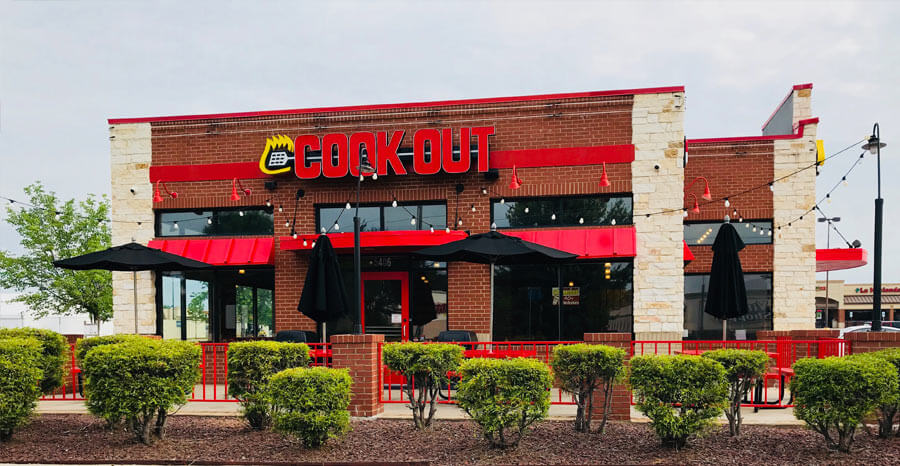
Cook Out feels less like a carefully polished national chain and more like a local favorite that kept growing. Its restaurants are known for bright red signs, late-night drive-thru lines, charcoal-grilled burgers, barbecue, hot dogs, and a menu board packed with choices. The experience can look simple from the outside, but the company has built a very specific business model around speed, value, variety, and regional loyalty.
From One Greensboro Drive-Thru to a Southern Institution
Cook Out began in 1989 on Randleman Road in Greensboro, North Carolina. The first restaurant focused on food that felt familiar to customers across the South: hamburgers cooked over a grill, hot dogs, chopped pork barbecue, fries, and thick milkshakes. Instead of trying to make fast food feel futuristic, Cook Out leaned into the atmosphere of a backyard meal and built its name around food that was affordable, filling, and easy to order from the car.
The company grew carefully inside North Carolina before crossing state lines. Cook Out’s own history shows that all of its locations were still in North Carolina in 2009. In 2010, the chain opened its first restaurants in South Carolina, Tennessee, and Virginia. Expansion continued across the Southeast, and the company reached its 300th restaurant in Memphis in 2022. That pace matters because Cook Out remained privately held and relied on company-controlled growth instead of using a huge outside franchise network.
The company also invested in systems that support its freshness message. In 1999, Cook Out established a meat commissary where beef could be ground, formed into patties, and delivered to restaurants each day. That behind-the-scenes decision turned the phrase “Always Fresh, Never Frozen” into an operating commitment rather than a marketing line. It also gave the chain more control over consistency as it moved into new markets.
My Go To Order
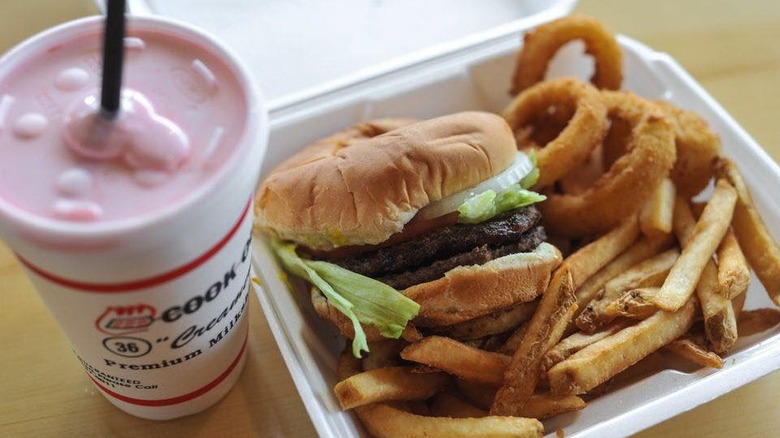
- Big Double Burger Tray: The tray is the clearest expression of Cook Out’s value strategy. I would order the burger Cook Out Style with chili, slaw, mustard, and onion, then add Cajun fries and hushpuppies as the two sides. One order shows how the company turns customization into a reason to return.
- Barbecue Sandwich: The chopped pork barbecue connects the menu to Cook Out’s North Carolina roots. It gives the chain a regional item that feels more distinctive than another standard chicken sandwich or cheeseburger.
- Peanut Butter Fudge Milkshake: Cook Out’s long shake list turns dessert into an experience. The ability to mix familiar flavors makes the menu feel personal, and the thickness of the shake gives customers a product they remember after the meal.
The Business Behind the Billions
The Cook Out Tray: Turning Value Into a Signature Product
Cook Out’s most important menu idea is not one individual burger or shake. It is the Cook Out Tray, a combination that lets customers choose a main item, two sides, and a drink. The structure makes a large menu easier to understand because it gives customers a simple starting point. A person can choose a burger, barbecue sandwich, chicken strips, quesadillas, or another main item, then build the rest of the meal around personal preferences.
The tray also changes how customers judge price. Instead of comparing the cost of one burger with a competitor’s burger, they compare an entire meal with two sides and a drink. That makes the order feel abundant and helps Cook Out compete on perceived value. Some side choices, such as a corn dog, chicken wrap, or quesadilla, are substantial enough to feel like extra menu items rather than small additions. The customer leaves feeling that the company gave them more control and more food for the money.
From a business perspective, the tray can lift the average transaction while still protecting the value image. Customers who arrive for a low-priced burger are encouraged to buy a full meal, and many pay extra to upgrade the drink to a milkshake. The lesson is that value does not always mean selling the cheapest single item. It can mean packaging several products in a way that feels generous, easy, and worth repeating.
Menu Variety: Giving Customers a Reason to Come Back
Cook Out offers burgers, hot dogs, barbecue, chicken, quesadillas, wraps, fries, onion rings, hushpuppies, cheese bites, and a long list of drinks and desserts. That variety allows one restaurant to satisfy groups with different preferences. A customer who wants a classic burger can order beside someone who wants barbecue or a chicken wrap, which makes Cook Out useful for late-night groups, families, and college students.
Variety also supports repeat visits. A smaller menu can be easier to operate, but customers may settle into the same order and visit less often. Cook Out’s tray system invites experimentation because changing one side or shake flavor makes the meal feel different without forcing customers to learn an entirely new menu. The choice itself becomes part of the entertainment, especially for first-time guests trying to understand how many combinations are possible.
The risk is complexity. Every added item creates more ingredients, training needs, equipment demands, and opportunities for mistakes. Cook Out manages that challenge by reusing core ingredients across different products. Beef, chicken, cheese, tortillas, sauces, and fried sides can appear in several combinations. This keeps the menu broad from the customer’s point of view while allowing the kitchen to work from a more manageable set of building blocks.
Milkshakes as a Traffic Driver and an Upgrade
Cook Out’s milkshakes are not treated like a small dessert category hidden at the bottom of the menu. With more than 40 flavors and the ability to combine many of them, shakes are one of the chain’s defining products. Familiar choices such as chocolate and strawberry sit beside flavors like banana pudding, peach cobbler, peanut butter fudge, and seasonal watermelon. That range creates curiosity and gives customers something to discuss before they even reach the restaurant.
A strong drink program can be financially valuable because beverages often carry attractive margins compared with many food items. At Cook Out, the shake also acts as an upgrade to the tray. A customer who planned to buy a standard drink can spend more for a dessert-like beverage, raising the value of the transaction without requiring another full meal. The shake therefore supports both the brand and the economics of each order.
The huge flavor list also encourages collecting behavior. Customers may return to try a different combination or wait for the seasonal watermelon shake. That emotional connection is hard for competitors to copy with a generic soft-drink fountain. Cook Out demonstrates that one memorable category can give a broad menu a clear identity and can turn an ordinary add-on into a reason for the entire visit.
Operational Control: Keeping Freshness Behind the Slogan
Cook Out’s promise of fresh, never frozen beef depends on a supply system that can deliver it. The meat commissary established in 1999 centralizes the daily grinding and forming of patties before they are loaded onto trucks and sent to restaurants. This gives the company more direct control over an important ingredient and helps stores follow the same standard as the chain expands.
Centralized production can create consistency and purchasing advantages, but it also demands disciplined logistics. Fresh meat has a shorter window than frozen inventory, so forecasting, transportation, food safety, and store-level execution have to work together. A missed delivery or inaccurate estimate can quickly affect service. Cook Out accepts that complexity because the freshness claim separates its burgers from many larger fast-food competitors.
The double drive-thru format supports another part of the operation: speed. Many locations use two lanes and a walk-up window, allowing the company to handle high demand without the cost of a large dining room. Some newer or remodeled locations include indoor seating, but the brand’s traditional design keeps real estate and service focused on takeout. The result is a model built around moving a large number of customized orders through a compact footprint.
Private, Regional Growth: Expanding Without Losing the Cult Following
Cook Out remained concentrated in North Carolina for two decades before making a major push into surrounding states. That slow start helped the company build dense local awareness, develop its supply network, and prove that the concept worked across different cities. By the time Cook Out entered new states, it was not an untested idea. It was a regional brand with customers already telling friends what to order.
The company is privately held, which gives its owners more freedom to think beyond quarterly earnings expectations. It can open restaurants when the supply chain and management team are ready, rather than chasing the fastest possible unit count. Cook Out has also kept control of its restaurants instead of using traditional franchising as the main growth engine. That requires more capital from the company, but it can protect operating standards and keep decision-making close to the brand.
Regional scarcity can strengthen demand. People who grow up with Cook Out often seek it out when traveling, and customers outside the Southeast regularly ask when the chain will reach their city. Expanding too quickly could weaken the very identity that makes the company special. Cook Out’s growth shows that a business can become large without trying to be everywhere at once, especially when local loyalty and operational control are central to its advantage.
Lessons From Cook Out for Aspiring Entrepreneurs
| Business Lesson | What Cook Out Shows |
|---|---|
| Value can be a brand | A memorable deal can become as important as a logo or slogan. |
| Variety creates repeat visits | A flexible menu gives customers reasons to build a different meal each time. |
| Operations support the promise | Fresh meat and fast service require disciplined systems behind the scenes. |
| Regional loyalty matters | Deep local recognition can create a strong base before wider expansion. |
| Private growth can be patient | A company does not need public markets or aggressive franchising to scale. |
The biggest lesson from Cook Out is simple: customers remember a business that gives them a clear reason to return. For Cook Out, that reason is the combination of value, customization, fresh-grilled food, and a milkshake list that turns an ordinary drive-thru visit into a ritual.
Want more stories where food meets business? Subscribe to Business Bites and get the next restaurant breakdown delivered to your inbox.


Leave a Reply