Welcome to Business Bites, the blog where food meets business strategy, and where every bite tells a story about what makes the biggest restaurant chains tick. If you’ve ever wondered why some restaurants become household names while others remain local favorites, you’re in the right place.
This series explores the decisions that transformed small restaurants into billion-dollar businesses. Every company has a unique story, and each one offers lessons in leadership, marketing, operations, and growth. Along the way, I’ll also share some of my favorite menu items because understanding the product is just as important as understanding the business behind it.
Today’s spotlight is on the burger chain that proved customers are willing to pay more when they believe they’re getting a better product: Five Guys.
Part 15 – Five Guy’s
Walk into a Five Guys, and one thing becomes obvious almost immediately. The menu is surprisingly small. You won’t find dozens of burger combinations, limited-time sandwiches, or flashy promotions covering the walls. Instead, the restaurant focuses on burgers, fries, hot dogs, and milkshakes.
At first glance, that might seem limiting. In reality, it’s one of the biggest reasons Five Guys has been so successful. Rather than trying to compete with companies like McDonald’s or Burger King on price, Five Guys built its reputation around quality. Fresh beef, hand-cut fries, generous portions, and made-to-order meals helped the company create an experience that feels different from traditional fast food.
Today, Five Guys has grown into an international brand with locations around the world, proving that customers will often pay more for a product they genuinely believe is better.
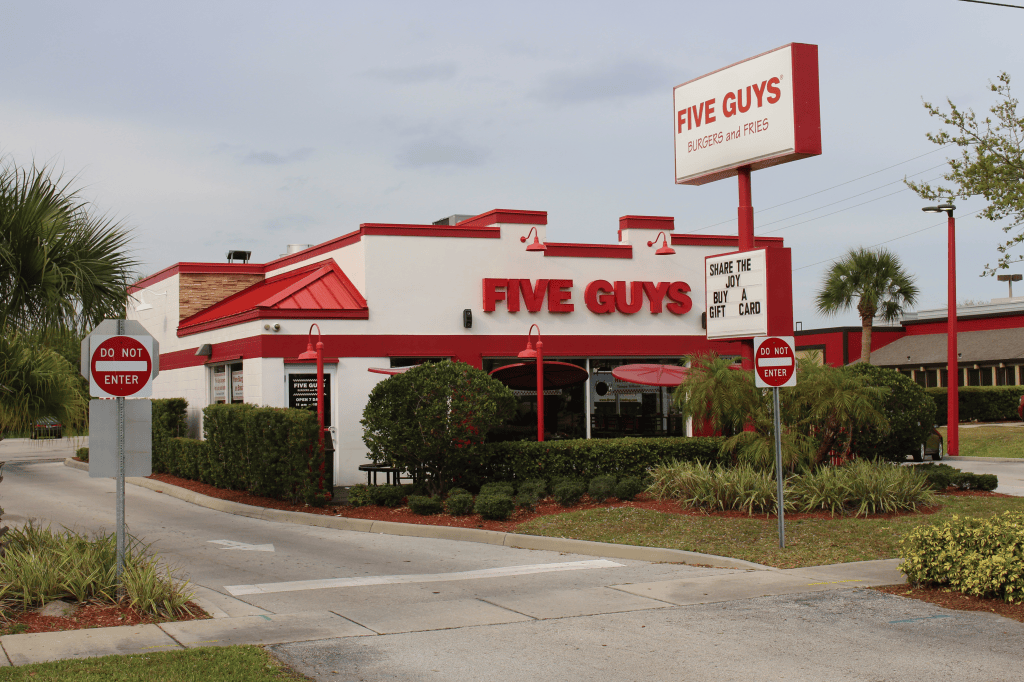
From a Family Business to an International Brand
Five Guys was founded in 1986 by Jerry and Janie Murrell in Arlington, Virginia. The name comes from the Murrell family’s five sons, who would eventually become heavily involved in the business.
The company’s philosophy was simple from the beginning: focus on quality and don’t cut corners. Fresh beef was never frozen. Fries were hand-cut every day from fresh potatoes. Burgers were cooked to order, and customers could choose from a long list of toppings at no additional cost.
Instead of growing rapidly during its early years, Five Guys spent nearly two decades operating primarily in the Washington, D.C. area. It wasn’t until 2003 that the company began franchising. Once it did, growth accelerated quickly. Within a few years, hundreds of franchise agreements had been signed, helping Five Guys expand across the United States before entering international markets.
Although the company has become much larger, it has remained committed to many of the same operating principles that made the original restaurant successful.
My Go-To Order
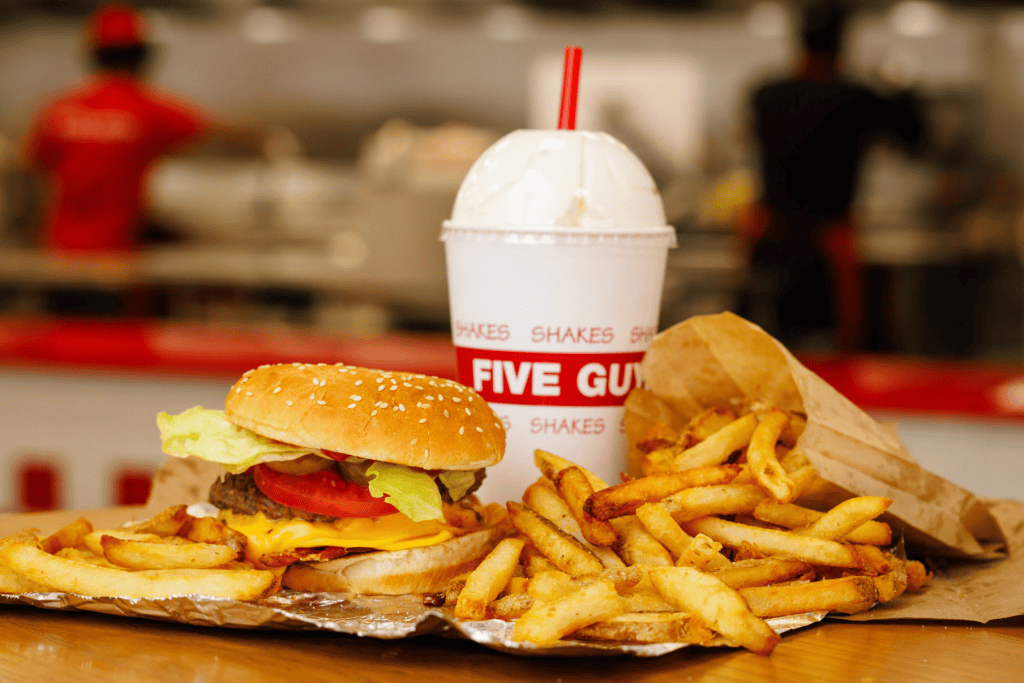
When diving into a business, you’ve got to taste the product, right? Here are the items I usually order from Five Guys and why I think they’ve become customer favorites.
Little Cheeseburger: This is usually my order. Even though it’s called a “Little” Cheeseburger, it’s still incredibly filling. I like being able to customize it with whatever toppings I want, and the fresh ingredients make it taste noticeably different from many traditional fast-food burgers.
Cajun Fries: If you’ve ever been to Five Guys, you’ve probably noticed that one order of fries is enough for multiple people. The generous portions have become one of the restaurant’s trademarks. The Cajun seasoning gives them even more flavor and helps differentiate them from standard fries.
Milkshake: Five Guys introduced milkshakes years after opening, but they’ve become a popular addition to the menu. With mix-ins like Oreo cookies, peanut butter, bacon, and salted caramel, customers can customize their shakes just as much as their burgers.
Free Peanuts: While they aren’t technically a menu item, the complimentary peanuts have become part of the Five Guys experience. Small touches like this help create a memorable visit and rein
The Business Behind the Billions
Competing on Quality Instead of Price
Most major fast-food chains compete aggressively on value. Dollar menus, coupons, and limited-time discounts are all designed to attract price-conscious customers.
Five Guys took the opposite approach. Instead of trying to become the cheapest burger restaurant, the company focused on delivering a product that customers believed was worth paying more for. Fresh beef, made-to-order burgers, generous portions, and premium ingredients justified higher prices while helping the company build a loyal following.
This strategy demonstrates an important lesson for entrepreneurs. Competing solely on price often leads to lower profit margins. Creating greater value can be a much more sustainable competitive advantage.
Keeping the Menu Simple
Five Guys has one of the simplest menus among major burger chains. Rather than introducing dozens of specialty burgers or seasonal menu items, the company focuses on executing a small number of products exceptionally well.
A smaller menu simplifies operations, reduces inventory complexity, and makes employee training much easier. It also allows management to focus its attention on maintaining quality instead of constantly introducing new products.
Customers don’t seem to mind the limited menu because the food consistently meets expectations. Sometimes doing fewer things better creates more value than trying to offer something for everyone.
Customization Without Complexity
Although the menu itself is relatively small, customers still enjoy tremendous flexibility. Five Guys offers a long list of free toppings, allowing people to build burgers that match their individual preferences.
This creates the feeling of endless choice without requiring the restaurant to carry hundreds of unique ingredients. The same toppings can be combined in dozens of different ways, giving customers a personalized experience while keeping operations efficient.
Many successful businesses use this strategy. Rather than expanding product lines indefinitely, they find ways to let customers customize existing products.
Word-of-Mouth Over Traditional Advertising
One of the most interesting aspects of Five Guys’ growth is what the company hasn’t done. Unlike many competitors, Five Guys has spent relatively little on national television advertising.
Instead, much of its growth has been driven by customer recommendations, positive reviews, and strong reputation. When people genuinely enjoy a product, they’re naturally inclined to tell friends and family about it.
Word-of-mouth marketing is incredibly valuable because customers often trust recommendations from other people more than advertisements. Five Guys invested heavily in creating a product customers wanted to talk about instead of relying exclusively on expensive marketing campaigns.
Protecting the Brand During Expansion
Once Five Guys began franchising, the company faced the same challenge every growing restaurant chain eventually encounters: maintaining consistency across hundreds of locations.
The company addressed this through standardized operating procedures, quality expectations, and careful franchise selection. Customers expect the same experience regardless of which location they visit, and maintaining those standards is critical for protecting the brand.
Rapid growth can be exciting, but sustainable growth depends on consistency. Five Guys has worked to balance expansion with quality, allowing it to preserve the reputation that made customers loyal in the first place.
Lessons From Five Guy’s for Aspiring Entrepreneurs
Strategy | What It Teaches |
|---|---|
| Premium Positioning | Customers will pay more for products they believe are higher quality |
| Simplicity | Focusing on fewer products often improves execution |
| Brand Identity | Personalization adds value without increasing unnecessary complexity |
| Word-of-Mouth Marketing | Great products create their own advertising |
Final Thoughts
Five Guys built one of the most successful premium burger brands in the world by refusing to compete solely on price. Through fresh ingredients, simple operations, generous portions, and a relentless focus on quality, the company proved there was room in the market for a different kind of fast-food experience.
Its story reminds entrepreneurs that success doesn’t always come from offering the lowest prices or the biggest menu. Sometimes it comes from doing a few things exceptionally well and giving customers a product they’re excited to recommend to others.
Want more bites of business?
Subscribe to get every new post delivered straight to your inbox.
Sources:
- Our Story – Five Guys Official Website
- Five Guys Franchise Information
- Jerry Murrell and the History of Five Guys – Five Guys Official Website
- How Five Guys Built a Premium Burger Brand – Restaurant Business Online
- Five Guys Growth Strategy and Expansion – QSR Magazine
- Five Guys Statistics and Industry Data – Statista Research Department
- Why Five Guys Rarely Advertises – Forbes Contributors
- How Five Guys Became a Global Burger Chain – Entrepreneur Magazine
- Five Guys and the Power of Word-of-Mouth Marketing – CNBC Restaurants Coverage
- Five Guys’ Franchise Success Story – Franchise Times
 Business Bites
Leave a comment