Welcome to Business Bites, the blog where food meets business strategy, and where every bite tells a story about what makes the biggest restaurant chains tick. If you’ve ever wondered why some restaurants become household names while others remain local favorites, you’re in the right place.
This series explores the decisions that transformed small restaurants into billion-dollar businesses. Every company has a unique story, and each one offers lessons in leadership, marketing, operations, and growth. Along the way, I’ll also share some of my favorite menu items because understanding the product is just as important as understanding the business behind it.
Today’s spotlight is on the restaurant that made seafood a fast-food staple: Long John Silver’s
Part 41 – Long John Silver’s
Most fast-food chains focus on burgers, chicken, or pizza because those foods are easy to prepare quickly and appeal to almost everyone. Seafood presents a much bigger challenge. It’s more expensive, has a shorter shelf life, and requires careful sourcing to maintain quality.
Long John Silver’s built an entire business by embracing those challenges instead of avoiding them. While competitors fought over the same burger and chicken customers, the company became America’s largest quick-service seafood chain by occupying a market with very little direct competition.
More than five decades after opening its first restaurant, Long John Silver’s remains proof that sometimes the best strategy isn’t beating competitors at their own game—it’s competing where few others choose to play.
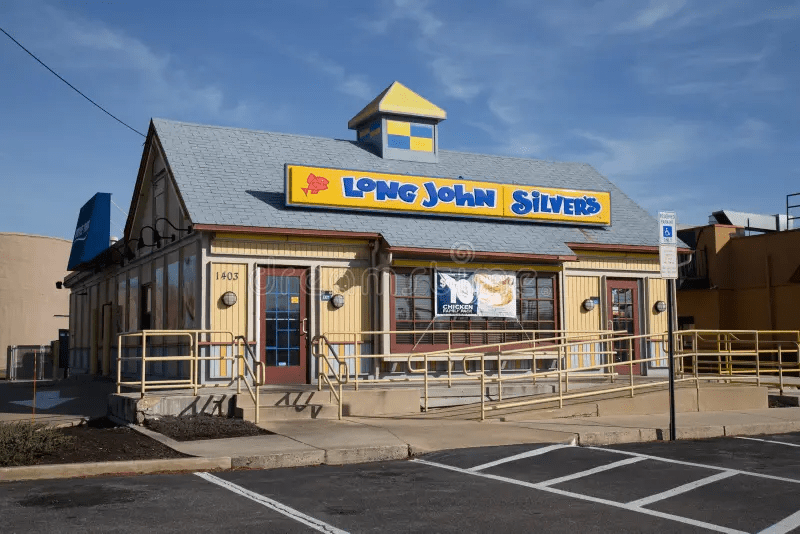
From a Kentucky Restaurant to America’s Seafood Chain
Long John Silver’s was founded in 1969 by Jim Patterson in Lexington, Kentucky. Inspired by the pirate from Treasure Island, Patterson wanted to create a restaurant centered around affordable seafood served quickly to everyday families instead of expensive sit-down dining.
From the beginning, battered fish, shrimp, hush puppies, and fries formed the core of the menu. The company designed its restaurants with a nautical theme, giving customers an experience that felt different from visiting a traditional burger restaurant. Over time, drive-thrus, combo restaurants, and menu expansions helped the brand reach customers across the country.
The company experienced rapid growth throughout the 1970s and 1980s before becoming part of several larger restaurant groups, including Yum! Brands. Today, Long John Silver’s operates as an independent company owned by Four Oaks Partners and continues investing in remodeled restaurants while expanding through franchising. Recent years have included extensive remodels and a return to measured growth despite operating fewer locations than at its historical peak.
My Go-To Order
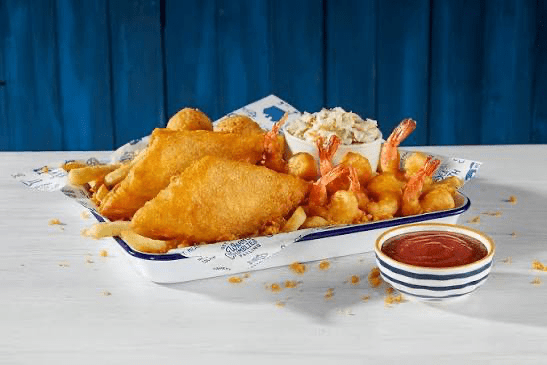
When diving into a business, you’ve got to taste the product, right? Here are the items I usually order from Long John Silver’s and why they’ve remained customer favorites.
Fish & Shrimp Platter: This is usually my order because it showcases the two products that built the brand while offering customers variety in one meal.
Fish Sandwich Combo: It demonstrates how Long John Silver’s competes directly with other fast-food chains while staying true to its seafood identity.
Popcorn Shrimp Basket: Smaller shrimp pieces help the company offer seafood at an affordable price while appealing to customers looking for a lighter meal.
Hush Puppies: Few side items are as closely associated with seafood restaurants. They’re inexpensive to produce but help complete the overall dining experience.
Overall, my order reflects Long John Silver’s strategy of offering seafood in approachable, value-focused meals that appeal to a broad customer base.
The Business Behind the Billions
Owning a Unique Market
Instead of competing directly with hundreds of burger restaurants, Long John Silver’s focused almost entirely on seafood. That specialization allowed the company to become synonymous with quick-service fish and shrimp in much of the United States.
Finding an underserved market often creates stronger long-term advantages than entering an overcrowded one.
Making Seafood Affordable
Seafood has traditionally been viewed as a premium dining option. Long John Silver’s changed that by simplifying preparation, standardizing recipes, and purchasing at scale, allowing customers to enjoy seafood at prices closer to traditional fast food.
Making an expensive product more accessible can dramatically expand the potential customer base.
Building Trust Through Responsible Sourcing
Seafood customers increasingly care about where their food comes from. Long John Silver’s emphasizes responsibly sourced wild-caught seafood, including Alaska pollock, salmon, and North Pacific cod. That commitment helps strengthen customer confidence while differentiating the brand from competitors.
Businesses that invest in supply chain quality often strengthen their brands far beyond the immediate product itself.
Growing Through Franchising
Like many successful restaurant brands, Long John Silver’s expanded nationally through franchising. Franchise owners invested in local restaurants while following standardized operating procedures, marketing programs, and recipes developed by the company.
This approach allowed the business to scale much faster than relying solely on company-owned locations.
Modernizing Without Losing Its Identity
As customer expectations changed, Long John Silver’s introduced remodeled restaurants, updated branding, digital ordering, and expanded grilled seafood offerings while keeping its core menu largely intact. Rather than abandoning what customers loved, the company modernized around its strengths.
Successful companies evolve without losing the qualities that made them recognizable in the first place.
Lessons From Long John Silver’s for Aspiring Entrepreneurs
Strategy | What It Teaches |
|---|---|
| Market Specialization | Serving a niche can create lasting competitive advantages |
| Product Accessibility | Making premium products affordable expands demand |
| Responsible Sourcing | Strong supply chains build long-term customer trust |
| Franchising | Standardized systems enable efficient national growth |
Final Thoughts
Long John Silver’s demonstrates that successful businesses don’t always need to chase the largest markets. By focusing on seafood while most competitors concentrated on burgers and chicken, the company built a category that customers immediately associated with its brand.
What stands out most is its willingness to specialize. Rather than trying to become another general fast-food restaurant, Long John Silver’s leaned into what made it different and spent decades refining that identity.
For entrepreneurs, that’s perhaps the biggest takeaway. Standing apart from competitors often creates more value than trying to outperform them at the exact same game. A clearly defined niche can become one of the strongest competitive advantages a business can have.
Want more bites of business?
Subscribe to get every new post delivered straight to your inbox.
Sources:
- Long John Silver’s – About Us
- Long John Silver’s – Franchising
- Long John Silver’s – Menu & Seafood Information
- Long John Silver’s – Sustainability & Seafood Sourcing
- Restaurant Business – Long John Silver’s News & Analysis
- QSR Magazine – Long John Silver’s Coverage
- Nation’s Restaurant News – Long John Silver’s Coverage
- Entrepreneur – Long John Silver’s Franchise Profile
- Technomic – Restaurant Industry Insights
- Statista – U.S. Quick-Service Restaurant Industry Statistics
 Business Bites
Leave a comment