Welcome to Business Bites, the blog where food meets business strategy, and where every bite tells a story about what makes the biggest restaurant chains tick. If you’ve ever wondered why some restaurants become household names while others remain local favorites, you’re in the right place.
This series explores the decisions that transformed small restaurants into billion-dollar businesses. Every company has a unique story, and each one offers lessons in leadership, marketing, operations, and growth. Along the way, I’ll also share some of my favorite menu items because understanding the product is just as important as understanding the business behind it.
Today’s spotlight is on the restaurant that practically invented modern fast food:
White Castle
Part 42 – White Castle
Long before drive-thrus, value meals, and billion-dollar burger chains dominated America, White Castle was proving that food could be prepared quickly, consistently, and affordably without sacrificing customer trust.
In the early 1920s, hamburgers had a surprisingly poor reputation. Many consumers viewed them as low-quality food made from questionable ingredients. White Castle didn’t just open another burger restaurant, it changed how Americans thought about hamburgers altogether.
More than a century later, White Castle remains one of the most influential companies in restaurant history. While it may not have as many locations as McDonald’s or Burger King, many of the operating principles those companies use today can be traced back to White Castle.
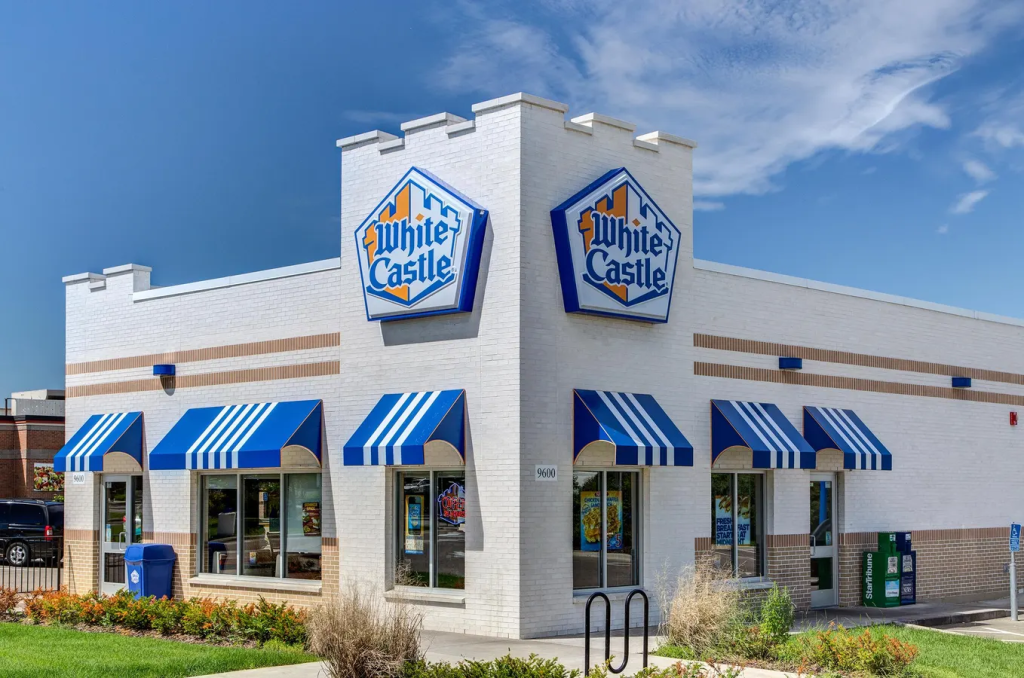
From Wichita to the Birth of Fast Food
White Castle was founded in Wichita, Kansas, in 1921 by Billy Ingram and Walter Anderson. Their vision was to make hamburgers affordable, trustworthy, and available to everyday Americans.
Instead of operating like traditional restaurants of the time, White Castle emphasized speed, cleanliness, and consistency. Employees prepared burgers in full view of customers, allowing people to see exactly how their food was made. At a time when food safety standards varied widely, this transparency helped build consumer confidence.
The founders also standardized nearly every part of the business. Restaurants shared the same architecture, equipment, menu, recipes, and operating procedures. Customers could expect the same meal whether they visited one location or another, an idea that would later become one of the defining characteristics of modern fast-food chains.
Perhaps the company’s most famous innovation was the slider—a small square hamburger designed to cook quickly and be sold at an affordable price. The slider became synonymous with White Castle and remains one of the most recognizable products in the restaurant industry.
Today, White Castle operates hundreds of restaurants across the United States and remains family-owned more than 100 years after its founding.
My Go-To Order
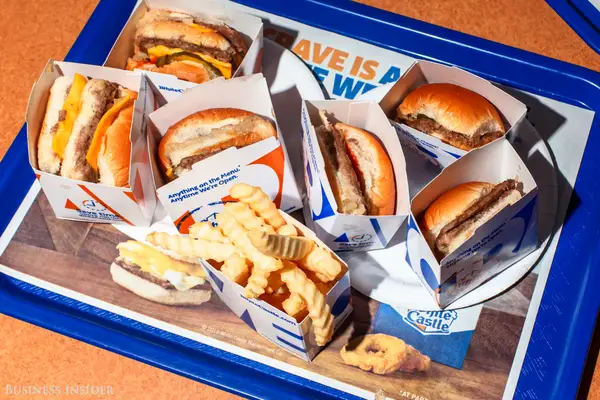
When diving into a business, you’ve got to taste the product, right? Here are the items I usually order from White Castle and why they’ve remained customer favorites.
Original Slider: This is almost always my order because it’s the product that built the company. Its small size encourages customers to purchase multiple sliders, naturally increasing the average order value.
Cheese Sliders: Adding cheese gives customers a familiar upgrade while requiring very little operational complexity.
Chicken Rings: Rather than offering traditional nuggets, White Castle introduced a unique product that helps distinguish its menu from competitors.
Crinkle-Cut Fries: A classic side that complements the sliders while creating profitable combo meals.
Overall, my order reflects White Castle’s strategy of building an entire brand around a small number of iconic products rather than an overwhelming menu.
The Business Behind the Billions
Building Trust Through Transparency
When White Castle opened, hamburgers suffered from a poor public image. Instead of trying to convince customers through advertising alone, the company designed restaurants where people could watch employees prepare food in spotless kitchens.
Transparency became one of White Castle’s greatest marketing tools. Customers trusted what they could see.
Standardizing Operations
White Castle was among the first restaurant companies to standardize recipes, equipment, restaurant layouts, and employee training across every location. This consistency allowed customers to receive nearly identical meals regardless of where they visited.
Standardization remains one of the biggest reasons franchised restaurant concepts can scale successfully today.
Creating an Iconic Signature Product
The slider wasn’t simply a smaller hamburger—it became White Castle’s identity. Customers didn’t just visit for burgers; they visited specifically for sliders.
Businesses become easier to remember when they own one product category in customers’ minds.
Keeping the Menu Focused
While many competitors constantly introduce new menu items, White Castle has remained remarkably disciplined. Although it has added products over the years, sliders continue to dominate the menu.
A focused menu simplifies operations, reduces inventory costs, improves speed, and reinforces brand identity.
Staying Family-Owned
Unlike many major restaurant chains that have changed ownership multiple times, White Castle has remained under family ownership since its founding. This has allowed the company to prioritize long-term stability over short-term financial performance, investing in innovation while preserving the culture that made the business successful.
Long-term thinking often becomes a competitive advantage when businesses aren’t pressured to maximize quarterly results.
Lessons From White Castle for Aspiring Entrepreneurs
Strategy | What It Teaches |
|---|---|
| Transparency | Building customer trust creates lasting competitive advantages |
| Standardization | Consistent systems make businesses scalable |
| Signature Products | Owning one iconic product strengthens brand |
| Operational Focus | Simple businesses are often easier to scale successfully |
Final Thoughts
White Castle’s greatest contribution isn’t simply introducing the slider—it’s helping create the blueprint for the modern fast-food industry. Concepts that seem ordinary today, such as standardized operations, visible food preparation, and consistent customer experiences, were revolutionary when the company introduced them.
What stands out most is how the founders solved a trust problem before they solved a convenience problem. By showing customers exactly how their food was prepared, White Castle transformed hamburgers from a questionable product into a mainstream American meal.
For entrepreneurs, that lesson remains just as valuable today. Before customers buy your product, they need confidence in your business. Companies that earn trust first often build stronger brands than those focused only on making the next sale.
Want more bites of business?
Subscribe to get every new post delivered straight to your inbox.
Sources:
- White Castle – Our Story
- White Castle – Company History
- White Castle – Menu
- Restaurant Business – White Castle News & Analysis
- QSR Magazine – White Castle Coverage
- Nation’s Restaurant News – White Castle Coverage
- Entrepreneur – White Castle Franchise & Company Profile
- National Restaurant Association – History of White Castle and Fast Food
- Britannica – White Castle System, Inc.
- Statista – U.S. Quick-Service Restaurant Industry Statistics


Leave a Reply