Welcome to Business Bites, the blog where food meets business strategy, and where every bite tells a story about what makes the biggest restaurant chains tick. If you’ve ever wondered why some restaurants become household names while others remain local favorites, you’re in the right place.
This series explores the decisions that transformed small restaurants into billion-dollar businesses. Every company has a unique story, and each one offers lessons in leadership, marketing, operations, and growth. Along the way, I’ll also share some of my favorite menu items because understanding the product is just as important as understanding the business behind it.
Today’s spotlight is on the pizza chain that proved location can be just as powerful as the product itself:
Sbarro
Part 58 – Sbarro
When most people think about pizza restaurants, they picture neighborhood pizzerias or national delivery chains like Domino’s and Pizza Hut. Sbarro built its business around a completely different idea. Instead of waiting for customers to seek out pizza, it placed its restaurants where millions of people were already shopping.
For decades, Sbarro became almost synonymous with the American shopping mall. Whether someone wanted a quick lunch during a shopping trip or a slice before heading home, Sbarro made pizza convenient without sacrificing the familiar experience of a New York-style slice.
Although malls have changed dramatically over the years, Sbarro’s strategy of meeting customers where they already are continues to shape the company’s expansion into airports, travel plazas, universities, casinos, and international markets.
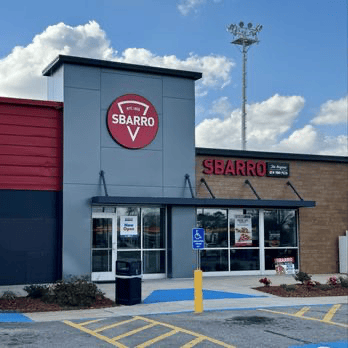
From an Italian Grocery Store to a Global Pizza Brand
Sbarro’s story began in 1956 when Gennaro and Carmela Sbarro immigrated from Naples, Italy, and opened an Italian grocery store in Brooklyn, New York. The family sold imported cheeses, meats, breads, and homemade Italian dishes, gradually earning a loyal local following.
As demand for their pizza increased, the family shifted its focus from groceries to prepared foods. In the 1970s, they made a decision that would define the company’s future: instead of opening traditional standalone restaurants, they expanded into shopping malls. At the time, malls were becoming major gathering places for American families, making them ideal locations for quick-service restaurants.
The strategy proved incredibly successful. Throughout the 1980s and 1990s, Sbarro expanded across the United States and internationally, becoming one of the most recognizable pizza brands in food courts. Today, the company operates hundreds of restaurants in more than 25 countries while continuing to grow through franchising and nontraditional locations.
My Go-To Order
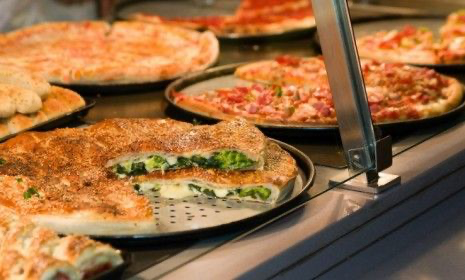
When diving into a business, you’ve got to taste the product, right? Here are the items I usually order from Sbarro and why they’ve remained customer favorites.
New York Cheese Pizza Slice: This is almost always my order because it represents the company’s signature oversized New York-style pizza that made the brand famous.
Stuffed Stromboli: Filled with meats and cheese, the stromboli offers something different while staying true to Sbarro’s Italian roots.
Baked Ziti: One of the company’s most popular pasta dishes, it demonstrates that Sbarro is more than just a pizza restaurant.
Garlic Breadsticks: A simple side that complements nearly every meal while increasing average order value.
Overall, my order reflects Sbarro’s strategy of combining classic Italian comfort food with quick-service convenience.
The Business Behind the Billions
Winning Through Location Strategy
Perhaps no restaurant chain illustrates the importance of location better than Sbarro. By placing restaurants inside shopping malls, airports, and travel centers, the company captured customers who were already nearby instead of relying solely on destination dining.
Sometimes choosing the right location creates a bigger competitive advantage than changing the product itself.
Serving Customers Quickly Without Sacrificing Quality
Unlike made-to-order pizza restaurants that require customers to wait, Sbarro prepares whole pizzas in advance and sells individual slices. This approach dramatically reduces wait times while still providing fresh, hot food throughout the day.
Operational efficiency often improves customer satisfaction just as much as menu innovation.
Diversifying Beyond Pizza
Although pizza remains the centerpiece of the menu, Sbarro also serves pasta, stromboli, salads, breadsticks, and desserts. This broader menu allows families and groups with different preferences to find something they enjoy.
Offering complementary products increases average order value while expanding the customer base.
Growing Through Franchising
Rather than owning every location itself, Sbarro relied heavily on franchising to expand both domestically and internationally. Franchise owners brought local market knowledge while benefiting from the company’s established brand, recipes, and operating systems.
Strong franchise partnerships allow businesses to scale much faster than relying solely on company-owned locations.
Adapting to Changing Consumer Behavior
As traditional shopping malls experienced declining traffic, Sbarro expanded into airports, universities, convenience stores, military bases, casinos, and travel plazas. Instead of depending on one type of location, the company evolved alongside changing customer habits.
Successful businesses recognize when markets change and adapt before those changes become long-term challenges.
Lessons From Sbarro for Aspiring Entrepreneurs
Strategy | What It Teaches |
|---|---|
| Location Strategy | Meeting customers where they already are can drive tremendous growth |
| Operational Efficiency | Faster service creates happier customers |
| Menu Diversification | Complementary products increase sales opportunities |
| Franchising | Strong systems support sustainable expansion |
Final Thoughts
Sbarro demonstrates that success isn’t always about creating the best product in an industry. Sometimes it’s about making a good product incredibly convenient. By recognizing the rise of shopping malls decades before many competitors, the company built one of the most recognizable pizza brands in America.
Perhaps the biggest lesson from Sbarro is the importance of adapting. As shopping habits changed, the company shifted toward airports, travel centers, and international markets instead of clinging to a business model that no longer offered the same opportunities.
For entrepreneurs, that’s an invaluable reminder. Great businesses don’t simply react to changing markets—they anticipate them. The companies that survive for generations are usually the ones willing to evolve while staying true to the core value they deliver customers.
Want more bites of business?
Subscribe to get every new post delivered straight to your inbox.
Sources:
- Sbarro – Our Story
- Sbarro – Menu
- Sbarro – Franchise Opportunities
- Sbarro – International Development
- Restaurant Business – Sbarro News & Analysis
- QSR Magazine – Sbarro Coverage
- Nation’s Restaurant News – Sbarro Coverage
- Entrepreneur – Sbarro Franchise Profile
- Wikipedia – Sbarro History
- Technomic – Restaurant Industry Insights


Leave a Reply