Welcome to Business Bites, the blog where food meets business strategy, and where every bite tells a story about what makes the biggest restaurant chains tick. If you’ve ever wondered why some restaurants become household names while others remain local favorites, you’re in the right place.
This series explores the decisions that transformed small restaurants into billion-dollar businesses. Every company has a unique story, and each one offers lessons in leadership, marketing, operations, and growth. Along the way, I’ll also share some of my favorite menu items because understanding the product is just as important as understanding the business behind it.
Today’s spotlight is on the Texas sandwich chain that turned one signature sandwich into a nationwide franchise:
Schlotzsky’s
Part 59 – Schlotzsky’s
Most restaurant chains launch with dozens of menu items, hoping something will become popular. Schlotzsky’s did the exact opposite. When it first opened, customers had just one choice: The Original sandwich.
That bold decision forced the company to perfect one product before expanding its menu. Built on fresh-baked sourdough bread inspired by the famous New Orleans muffuletta, The Original quickly became one of Austin’s most recognizable meals. Rather than confusing customers with endless options, Schlotzsky’s built its reputation around one unforgettable sandwich before gradually adding pizzas, soups, salads, and wraps.
More than 50 years later, Schlotzsky’s continues proving that simplicity, consistency, and fresh bread can build a lasting restaurant brand.
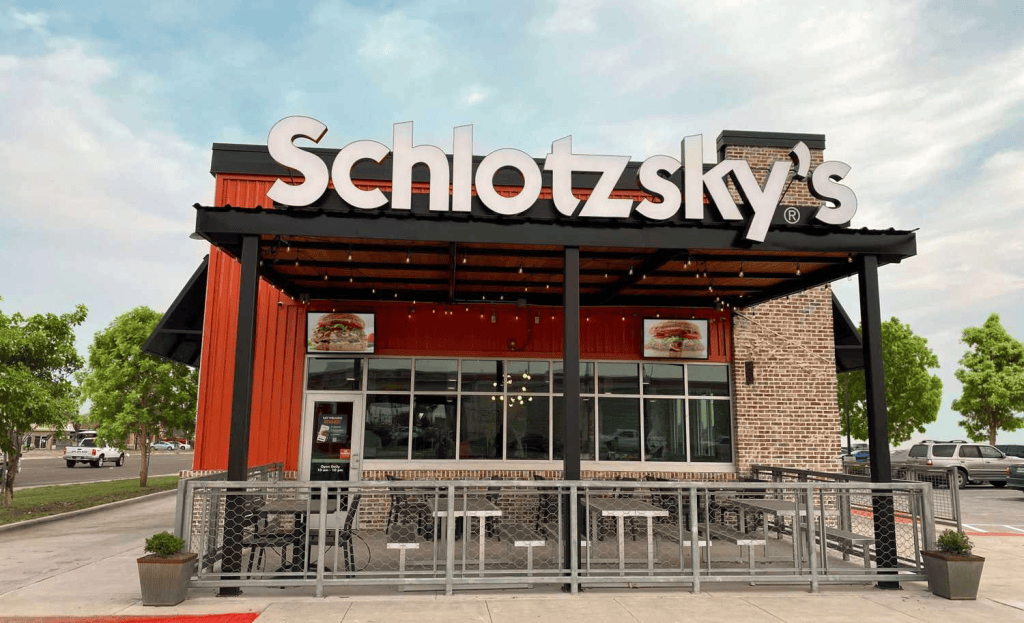
From One Sandwich Shop in Austin to an international restaurant chain
Schlotzsky’s was founded in 1971 by Don and Dolores Dissman in a small shop on South Congress Avenue in Austin, Texas. Inspired by the muffuletta sandwiches they had enjoyed in New Orleans, they created their own version using freshly baked sourdough bread and a combination of premium meats, cheeses, lettuce, tomatoes, olives, and dressing.
Remarkably, that was the entire menu.
Customers loved the simplicity. Instead of spending time deciding what to order, they simply came for “The Original.” As demand grew, the founders opened additional restaurants before beginning franchising in 1977. By 1981, Schlotzsky’s had already expanded to 100 locations.
Over the following decades, the menu expanded to include pizzas, soups, salads, flatbreads, and sandwiches while keeping freshly baked sourdough bread at the center of nearly every meal. Today, Schlotzsky’s operates more than 300 restaurants across the United States under the GoTo Foods family of brands.
My Go-To Order
When diving into a business, you’ve got to taste the product, right? Here are the items I usually order from Schlotzsky’s and why they’ve remained customer favorites.
The Original: This is always my order because it’s the sandwich that launched the company and still represents everything the brand stands for.
Turkey Original: It delivers the same famous sourdough experience with a lighter protein option while maintaining the flavors that customers expect.
Broccoli & Cheese Soup: Rich, creamy, and perfect alongside a toasted sandwich, making it one of the chain’s most popular combinations.
Jalapeño Chips: A longtime customer favorite that has almost become part of the Schlotzsky’s identity.
Overall, my order reflects Schlotzsky’s strategy of pairing signature sandwiches with simple sides that complete the meal without distracting from its core product.
The Business Behind the Billions
Mastering One Product First
Instead of launching with a huge menu, Schlotzsky’s focused entirely on making one exceptional sandwich. Only after establishing a loyal customer base did the company gradually expand its offerings.
Businesses often benefit more from mastering one product than offering dozens of average ones. That focus also made the brand promise easier for customers to remember.
Fresh-Baked Bread as a Competitive Advantage
The company’s signature sourdough bread remains its biggest differentiator. Rather than viewing bread as simply another ingredient, Schlotzsky’s built its entire identity around fresh-baked loaves that customers couldn’t easily find elsewhere.
Sometimes one outstanding component becomes the foundation of an entire brand. That familiar component connects different orders to one recognizable brand experience.
Growing Through Franchising
Once the concept proved successful in Austin, Schlotzsky’s expanded through franchising. Standardized recipes, operating procedures, and training allowed entrepreneurs across the country to recreate the same customer experience.
Strong systems make rapid expansion possible without sacrificing consistency. Growth therefore depended on repeatable routines rather than improvisation at every location.
Evolving the Menu Carefully
Although the company now offers pizzas, soups, salads, and sandwiches, every addition complements rather than replaces the original concept. Customers still associate Schlotzsky’s with toasted sandwiches on fresh sourdough bread.
Innovation works best when it strengthens your brand instead of confusing it. The wider selection still points customers back to the same central identity.
Reinventing the Customer Experience
As customer preferences changed, Schlotzsky’s remodeled restaurants, introduced digital ordering, expanded catering, and even added Cinnabon products to many locations. These updates helped modernize the brand while preserving the qualities that originally made it successful. Those changes widened access without replacing the product experience customers already understood.
Lessons From Schlotzsky’s for Aspiring Entrepreneurs
Strategy | What It Teaches |
|---|---|
| Product Focus | Perfect one product before expanding |
| Signature Ingredients | A unique ingredient can become your greatest competitive advantage |
| Franchising | Standardized systems support sustainable growth |
| Smart Innovation | Expand your menu without abandoning your identity |
Final Thoughts
Schlotzsky’s demonstrates that businesses don’t always need dozens of products to succeed. Sometimes one exceptional product, executed consistently for decades, is enough to build an enduring brand.
Maybe the company’s greatest lesson is the importance of restraint. Rather than chasing every food trend, Schlotzsky’s carefully expanded around the product that made customers fall in love with the brand in the first place.
For entrepreneurs, that’s an important takeaway. It’s tempting to do everything at once, but long-term success often comes from doing one thing extraordinarily well before moving on to the next opportunity.That does not mean ignoring new opportunities. It means knowing what customers actually return for and protecting that strength while the business grows. A larger menu, a redesigned dining room, or a new ordering option only helps when it supports the experience people already value. Schlotzsky’s story makes that balance easy to see: growth can feel fresh without making the original idea unrecognizable. The same principle applies well beyond restaurants. A young company earns trust by giving customers a clear reason to choose it, delivering that promise reliably, and expanding only when the next move fits. Restraint may look less exciting than constant reinvention, but it can create a much stronger foundation. When every new decision connects back to the core product, customers understand the brand, employees know what matters, and the business has a clearer path forward.
Want more bites of business?
Subscribe to get every new post delivered straight to your inbox.
Sources:
- Schlotzsky’s – About Us
- Schlotzsky’s – Menu
- Schlotzsky’s – Franchising
- GoTo Foods – Schlotzsky’s Brand Overview
- Restaurant Business – Schlotzsky’s News & Analysis
- QSR Magazine – Schlotzsky’s Coverage
- Nation’s Restaurant News – Schlotzsky’s Coverage
- Wikipedia – Schlotzsky’s History
- Technomic – Restaurant Industry Insights
- Entrepreneur – Schlotzsky’s Franchise Profile


Leave a Reply