Welcome to Business Bites, the blog where food meets business strategy, and where every bite tells a story about what makes the biggest restaurant chains tick. If you’ve ever wondered why some restaurants become household names while others remain local favorites, you’re in the right place.
This series explores the decisions that transformed small restaurants into billion-dollar businesses. Every company has a unique story, and each one offers lessons in leadership, marketing, operations, and growth. Along the way, I’ll also share some of my favorite menu items because understanding the product is just as important as understanding the business behind it.
Today’s spotlight is on the restaurant chain that turned eating in your car into an experience and managed to keep a nostalgic business model relevant for decades: Sonic Drive-In.
Part 21 – Sonic
If you’ve ever been to a Sonic, you know it feels different from almost every other fast-food restaurant.
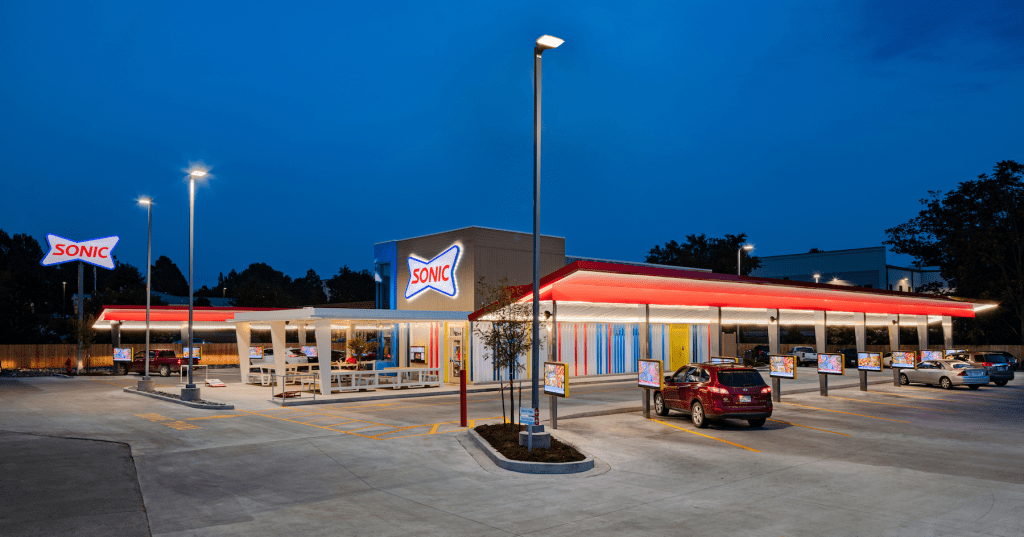
Instead of walking inside and waiting in line, customers pull into parking stalls, place their orders through speakers, and have food delivered directly to their cars, sometimes by employees on roller skates.
It almost feels like stepping back in time.
What’s impressive is that Sonic has managed to keep this old-school concept relevant in a modern restaurant industry dominated by mobile apps, delivery services, and drive-thrus.
While many restaurant chains look increasingly similar, Sonic has built its business around being different.
That differentiation has become one of its biggest strengths.
From a Root Beer Stand to a National Brand
Sonic’s story began in 1953 when founder Troy Smith opened a small root beer stand in Shawnee, Oklahoma.
Originally called Top Hat Drive-In, the restaurant quickly became popular. Smith noticed that customers enjoyed the convenience of ordering and eating directly from their cars.
As the business grew, he realized that the drive-in model itself could become a competitive advantage.
Eventually, the company changed its name to Sonic because the slogan “Service with the Speed of Sound” fit the brand’s emphasis on quick service.
Over the following decades, Sonic expanded primarily throughout the South and Midwest before becoming a national chain.
What I find interesting is that Sonic never completely abandoned its original identity, even as the restaurant industry changed dramatically around it. Many companies constantly reinvent themselves, but Sonic has remained surprisingly consistent.
Today, that uniqueness is one of the first things people think about when they hear the brand’s name.
My Go-To Order

When diving into a business, you’ve got to taste the product, right? Here are the items I usually order from Sonic and why I think they’ve become customer favorites.
Cherry Limeade: This is probably the product I associate most with Sonic. The drink menu is one of the company’s biggest differentiators, and the Cherry Limeade has become almost iconic.
Mozzarella Sticks: These are honestly one of my favorite items on the menu. They’re simple, but they fit perfectly with Sonic’s snack-focused approach.
Tater Tots: Most major chains serve fries, but Sonic made tater tots one of its signature side items. Small decisions like this help make the brand feel different.
Oreo Blast: Sonic has built an impressive dessert business, and products like the Blast help increase average order values while giving customers another reason to visit outside of traditional meal times.
The Business Behind the Billions
Differentiation Through Experience
One of Sonic’s biggest advantages is that the company offers an experience that few competitors can replicate.
Eating in your car while food is delivered directly to you creates a sense of novelty and nostalgia that customers remember.
This is important because restaurants don’t just compete on food anymore. They compete on experiences.
Customers often choose businesses that feel unique, and Sonic’s drive-in model gives it a clear identity in an industry where many brands can start blending together.
For entrepreneurs, this is a reminder that how you deliver your product can be just as important as the product itself.
Building a Beverage Empire
One thing that often gets overlooked about Sonic is how large its beverage business has become.
The company offers thousands of drink combinations through flavored syrups, mix-ins, slushes, teas, and lemonades.
This creates several advantages.
First, drinks generally have strong profit margins. Second, customers often visit Sonic specifically for beverages rather than meals. Third, seasonal drinks and limited-time offerings create excitement and encourage repeat visits.
It’s actually pretty impressive how Sonic turned drinks into one of its biggest competitive advantages.
Many people probably think of burgers first when they hear Sonic, but the beverage business may be even more important.
Daypart Diversification
Many restaurants depend heavily on lunch and dinner traffic.
Sonic has done a good job creating reasons for customers to visit throughout the day.
Someone may stop by in the afternoon for a slush, visit late at night for snacks, or grab breakfast in the morning.
This diversification helps the company generate revenue across multiple time periods rather than relying too heavily on one meal.
Businesses generally become stronger when they have multiple drivers of demand.
Franchising and Scalable Growth
Like many major restaurant companies, Sonic expanded primarily through franchising.
Franchising allowed the company to grow across the country while limiting capital requirements.
At the same time, the company was able to maintain many of the elements that made the original concept successful.
Balancing growth with consistency is always difficult, especially when your business model is somewhat unique.
Sonic has generally done a good job preserving its identity while continuing to expand.
The Power of Nostalgia
One of the more interesting aspects of Sonic’s success is how effectively it uses nostalgia.
Drive-ins were once much more common throughout America, but many disappeared over time.
Sonic managed to keep that concept alive.
Today, visiting Sonic feels a little different from visiting most fast-food chains, and that difference creates emotional value for customers.
Businesses often focus heavily on innovation, but nostalgia can also be incredibly powerful when used correctly.
People enjoy experiences that remind them of simpler times or feel unique compared to everyday routines.
Lessons From Sonic for Aspiring Entrepreneurs
Strategy | What It Teaches |
|---|---|
| Premium Positioning | Unique experiences create strong competitive advantages |
| Product Expansion | Complementary products can become major revenue drivers |
| Controlled Growth | Multiple sources of demand strengthen businesses |
| Franchising | Growth requires scalable systems |
Final Thoughts
Sonic’s success is a reminder that businesses do not always need to follow industry trends.
While many restaurant chains focused on becoming more similar to one another, Sonic continued embracing what made it different.
The drive-in experience, extensive beverage menu, and nostalgic atmosphere helped the company build a loyal customer base and remain relevant for decades.
What I find particularly interesting about Sonic is that its biggest advantage isn’t necessarily its food.
It’s the experience.
Customers remember pulling into the stalls, customizing drinks, and eating in their cars. Those memories create emotional connections that are difficult for competitors to replicate.
For entrepreneurs, there is an important lesson here: products matter, but experiences often create the strongest brands.
Up next on Business Bites: Whataburger. We’ll explore how a regional burger chain built one of the most loyal fan bases in the restaurant industry and why Texans treat it almost like a cultural institution.
Want more bites of business?
Subscribe to get every new post delivered straight to your inbox.
Sources:
- Our Story – Sonic Drive-In Official Website
- Inspire Brands and Sonic Drive-In Overview
- Sonic Investor Relations and Company Information
- How Sonic Uses Differentiation and Nostalgia to Compete – Restaurant Business Online
- Sonic’s Beverage Innovation and Growth Strategy – QSR Magazine
- Sonic Drive-In Statistics and Industry Data – Statista Research Department
- How Sonic Built a Unique Restaurant Experience – Forbes Contributors
- The Story Behind Sonic Drive-In’s Success – Entrepreneur Magazine
- How Sonic’s Drink Business Became a Competitive Advantage – CNBC Restaurants Coverage
- Sonic’s Franchise Expansion Strategy – Franchise Times


Leave a Reply