Welcome to Business Bites, the blog where food meets business strategy, and where every bite tells a story about what makes the biggest restaurant chains tick. If you’ve ever wondered why some restaurants become household names while others remain local favorites, you’re in the right place.
This series explores the decisions that transformed small restaurants into billion-dollar businesses. Every company has a unique story, and each one offers lessons in leadership, marketing, operations, and growth. Along the way, I’ll also share some of my favorite menu items because understanding the product is just as important as understanding the business behind it.
Today’s spotlight is on the company that turned one pastry into a worldwide phenomenon:
Cinnabon
Part 38 – Cinnabon
Most restaurants compete by offering lower prices, larger portions, or faster service. Cinnabon built its business around something far less conventional. Before customers ever see a menu, they usually smell warm cinnamon, fresh bread, and melted cream cheese frosting drifting through the mall or airport.
That sensory experience has become one of the company’s biggest competitive advantages. Instead of relying solely on advertising to attract customers, Cinnabon lets the product market itself. The aroma often convinces people to stop even when they weren’t planning to buy anything.
More than three decades after opening its first bakery, Cinnabon has grown into one of the world’s largest specialty bakery chains. Its success demonstrates that understanding customer behavior can be just as important as creating a great product.
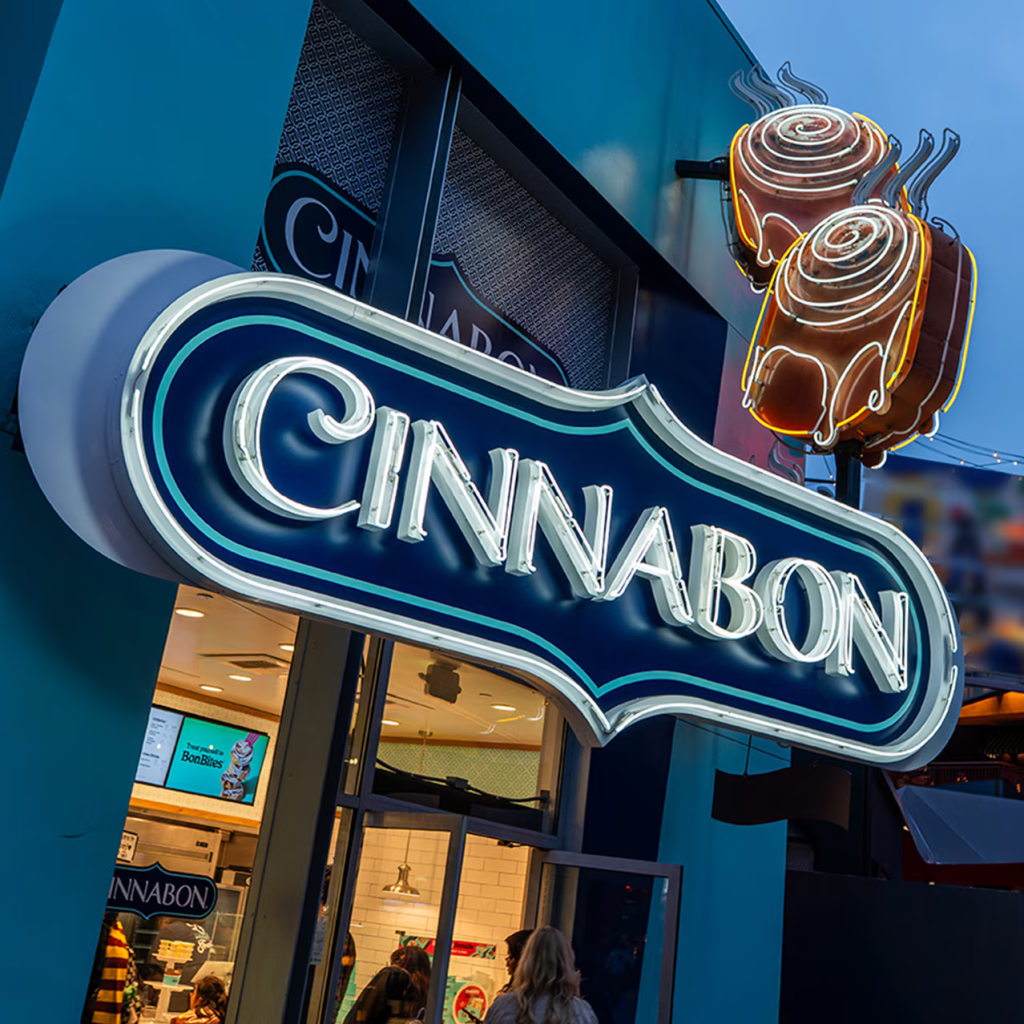
From One Bakery in Seattle to a Global Brand
Cinnabon opened its first bakery in Seattle, Washington, in 1985. The founders wanted to create what they believed would be the world’s best cinnamon roll, spending months refining recipes before opening to the public. Every ingredient was carefully selected, from the proprietary dough recipe to the Makara cinnamon imported from Indonesia.
The quality of the product mattered, but so did how it was presented. Instead of preparing pastries behind closed doors, Cinnabon baked rolls throughout the day in full view of customers. Watching the dough rise, the frosting spread across warm rolls, and the ovens constantly running became part of the experience.
As shopping malls expanded across the United States during the 1980s and 1990s, Cinnabon strategically opened stores in high-traffic locations where thousands of people passed by every day. Airports, outlet malls, casinos, universities, and travel centers later became ideal expansion opportunities because customers often make spontaneous purchasing decisions in those environments.
Today, Cinnabon operates more than 2,000 locations across dozens of countries and is part of GoTo Foods, alongside Auntie Anne’s, Jamba, Moe’s Southwest Grill, Carvel, Schlotzsky’s, and several other restaurant brands.
My Go-To Order
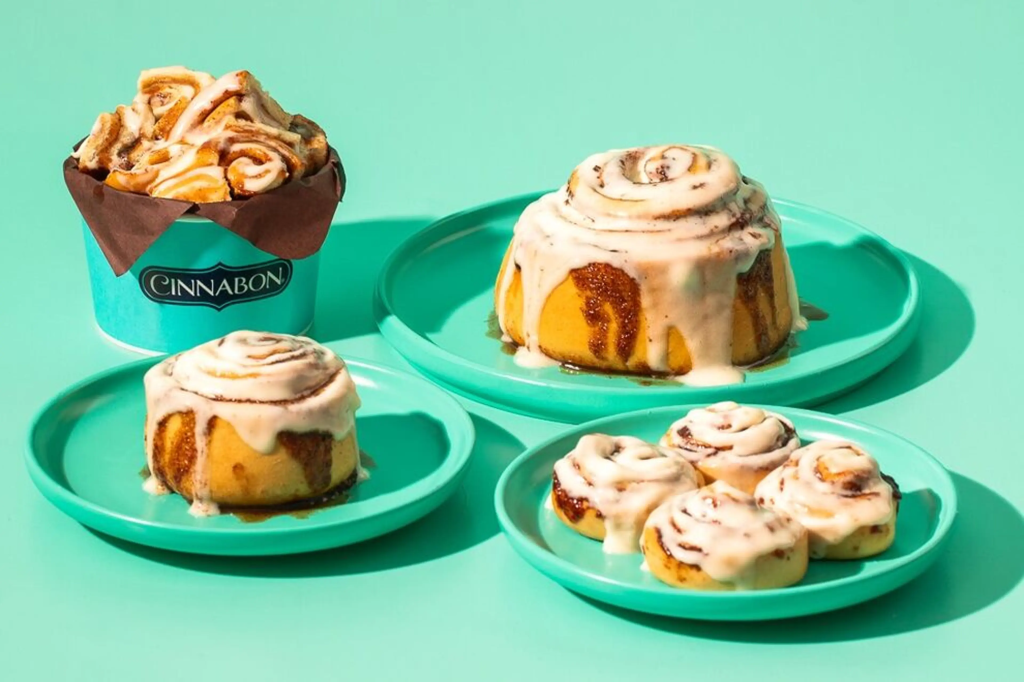
When diving into a business, you’ve got to taste the product, right? Here are the items I usually order from Cinnabon and why I think they’ve remained customer favorites.
Classic Roll: This is usually my order because it’s the product that built the entire company. It demonstrates how mastering one signature item can create an internationally recognized brand.
BonBites: Offering smaller portions gives customers another way to enjoy the product while making sharing easier. It also allows Cinnabon to reach customers who might hesitate to buy a full-sized roll.
Cold Brew Coffee: Pairing beverages with pastries naturally increases the average transaction value while creating a more complete customer experience.
Caramel PecanBon: Premium variations allow the company to serve customers looking for something more indulgent while increasing revenue without dramatically changing operations.
Overall, my order reflects Cinnabon’s strategy of building multiple products around one highly recognizable signature recipe.
The Business Behind the Billions
Turning Aroma Into Advertising
Few companies have mastered sensory marketing as effectively as Cinnabon. The smell of freshly baked cinnamon rolls often reaches customers before they even see the storefront. Because the pastries are baked throughout the day, the aroma continuously attracts nearby shoppers without the company spending additional money on advertisements.
This strategy demonstrates that marketing doesn’t always come through commercials or social media. Sometimes the product itself becomes the advertisement.
Choosing High-Traffic Locations
Cinnabon rarely depends on customers making a special trip. Instead, its stores are located where people are already spending time, including shopping malls, airports, casinos, and travel centers. These environments naturally encourage impulse purchases because customers are already walking past the store.
Location strategy can dramatically influence sales. Even an excellent product struggles if customers never encounter it.
Building an Entire Brand Around One Product
Many restaurant chains constantly expand their menus. Cinnabon took a more disciplined approach by making cinnamon rolls the center of nearly everything it sells. Even when introducing new products, the company usually builds upon flavors and ingredients customers already associate with the brand.
Businesses often become more memorable when customers immediately know what they specialize in.
Growing Through Franchising
Franchising enabled Cinnabon to expand internationally while maintaining consistent recipes, store designs, and customer experiences. Franchise owners invested in local locations while benefiting from established operating systems and one of the world’s most recognizable bakery brands.
This combination of entrepreneurial ownership and standardized processes allowed Cinnabon to grow efficiently across many different markets.
Creating Premium Perceived Value
A cinnamon roll isn’t an everyday necessity, yet customers willingly pay premium prices because the experience feels special. High-quality ingredients, attractive presentation, and consistent branding transform a relatively simple product into something customers associate with indulgence and celebration.
Perceived value often depends as much on the experience surrounding a product as the product itself.
Lessons From Cinnabon for Aspiring Entrepreneurs
Strategy | What It Teaches |
|---|---|
| Sensory Marketing | Products can become their own most effective advertisements |
| Location Strategy | High foot traffic creates opportunities for impulse purchases |
| Product Focus | Mastering one signature product builds stronger brand recognition |
| Franchising | Proven systems make international growth possible |
Final Thoughts
Cinnabon proves that extraordinary businesses don’t always begin with complicated ideas. Sometimes they begin by creating one exceptional product and presenting it in a way that customers simply can’t ignore.
What stands out most is how intentionally every part of the business has been designed. The aroma, the store locations, the open kitchens, and the limited menu all work together to encourage spontaneous purchases while reinforcing the company’s premium image.
For entrepreneurs, one lesson stands above the rest. Success isn’t always about reaching more customers through bigger advertising budgets. Sometimes it’s about creating such a memorable experience that the product does much of the marketing on its own.
Want more bites of business?
Subscribe to get every new post delivered straight to your inbox.
Sources:
- Cinnabon – About Us
- GoTo Foods – Our Brands (Cinnabon)
- Cinnabon Franchising – Official Franchise Information
- Restaurant Business – Cinnabon News & Analysis
- QSR Magazine – Cinnabon Coverage
- Forbes – Cinnabon & GoTo Foods Coverage
- Entrepreneur – Cinnabon Franchise Profile
- Technomic – Restaurant Industry Insights
- Statista – Cinnabon Statistics and Market Data
- Nation’s Restaurant News – Cinnabon Coverage


Leave a Reply