Welcome back to Business Bites, the blog where food meets business strategy. One of the most common pieces of business advice you’ll hear is that companies need to offer customers more choices. More products, more services, and more options are often viewed as the key to growth.
Raising Cane’s built a billion-dollar business by doing the exact opposite.
While most fast-food chains continue expanding their menus, Cane’s has remained committed to a simple concept: chicken fingers, fries, Texas toast, coleslaw, and a signature sauce. That’s essentially it.
At first glance, that sounds limiting. In reality, it became one of the company’s greatest strengths.
This week’s spotlight is on the chicken chain that proved sometimes less really is more: Raising Cane’s.
Part 7 – Raising Cane’s
Walk into a Raising Cane’s and you’ll notice something unusual almost immediately.
There aren’t dozens of menu boards filled with burgers, wraps, salads, desserts, and specialty items. Instead, the menu is remarkably simple. Customers are essentially choosing how many chicken fingers they want rather than choosing from dozens of completely different meals.
Most restaurant executives would probably be nervous about limiting customer choice that much. Yet Cane’s has grown into one of the fastest-growing restaurant chains in America by focusing on a single product and trying to make it exceptionally well.
The company’s success is a reminder that businesses don’t always win by doing more. Sometimes they win by doing fewer things better than everyone else.
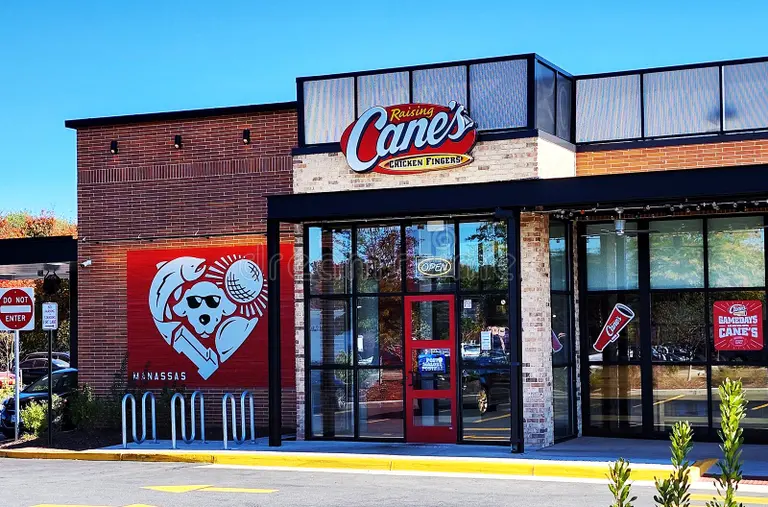
The Beginning of Raising Cane’s
Raising Cane’s was founded in 1996 by Todd Graves in Baton Rouge, Louisiana. The concept wasn’t immediately embraced. In fact, Graves reportedly received poor grades on a business plan built around a restaurant that sold only chicken fingers. Many people believed the idea was too narrow to succeed.
Unable to secure traditional financing, Graves worked a variety of jobs, including commercial fishing in Alaska, to help raise money for the business. Eventually, he opened the first Raising Cane’s near Louisiana State University.
From the beginning, the company’s mission was simple: serve high-quality chicken finger meals and focus on doing that one thing exceptionally well.
Unlike many restaurant chains that continuously expand their menus, Cane’s remained committed to its original concept. As customer demand grew, the company expanded across the United States while maintaining the same core menu and operating philosophy that made the first restaurant successful.
Today, Raising Cane’s operates hundreds of locations and continues to grow rapidly, all while staying remarkably focused on its original vision.
My Go-To Order
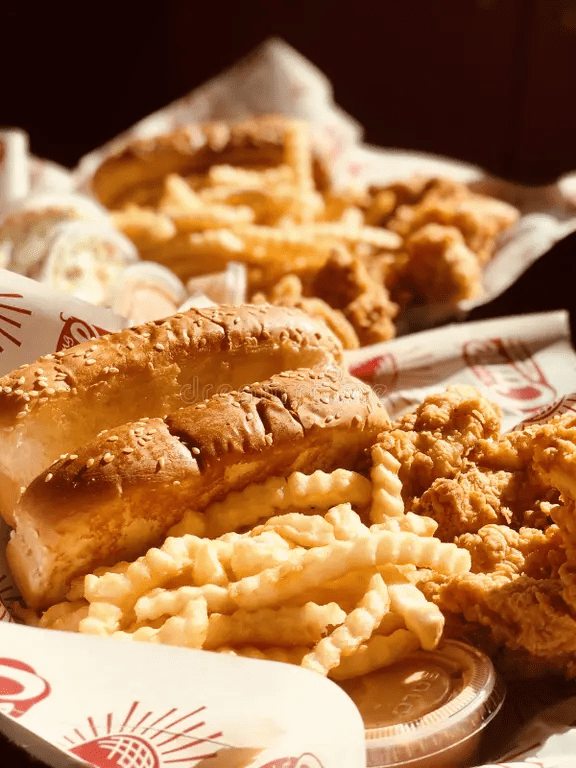
When looking at a restaurant business, it’s important to understand why customers keep coming back. Here are my favorite items from Raising Cane’s and why I think they’ve become so popular.
The Box Combo: This is usually what I order. You get four chicken fingers, fries, Texas toast, coleslaw, Cane’s Sauce, and a drink. It’s simple, filling, and gives you a little bit of everything the restaurant is known for. More importantly, it showcases the company’s entire business model in a single meal.
Texas Toast: It seems like a small part of the meal, but it’s surprisingly good. The buttery texture helps balance the meal and gives customers another reason to remember the overall experience.
Cane’s Sauce: Arguably the most important item on the menu besides the chicken itself. The sauce has become a signature product that customers associate specifically with the brand. Creating unique products like this can help build customer loyalty because people can’t easily find the exact same experience elsewhere.
The Business Behind the Billions
Extreme Menu Simplicity
One of the biggest reasons Raising Cane’s has been successful is its commitment to menu simplicity. Most restaurant chains eventually expand into new categories. They introduce breakfast items, seasonal products, premium options, and entirely new menu lines in an effort to attract more customers. Cane’s has largely resisted that temptation.
Because the menu is so focused, employees can master their jobs more quickly. New hires don’t need to memorize dozens of recipes or learn complicated preparation methods. Training becomes easier, service becomes faster, and consistency becomes easier to maintain. Customers know exactly what they’re getting every time they visit, which helps build trust in the brand.
The strategy also allows the company to concentrate its resources. Rather than spreading attention across dozens of products, Cane’s can focus almost entirely on making its core offerings as good as possible. For entrepreneurs, it’s a powerful lesson that focus can often be more valuable than variety.
Operational Efficiency
The simple menu doesn’t just benefit customers—it benefits the entire business. With fewer ingredients and fewer products, inventory management becomes much easier. Restaurants can order larger quantities of core ingredients, reduce waste, and streamline kitchen operations.
These efficiencies create meaningful financial advantages. Employees spend less time managing complexity, stores require less storage space, and kitchens can operate more smoothly during busy periods. While customers may never think about these operational details, they play a major role in profitability.
Many businesses underestimate the hidden costs of complexity. Every additional product or service introduces new challenges. Raising Cane’s demonstrates how simplifying operations can create both a better customer experience and a stronger financial model.
Building a Brand Around Quality
When a company only offers a handful of products, those products need to be excellent. Customers aren’t visiting Raising Cane’s because they want endless options. They’re visiting because they trust the quality of the food and the consistency of the experience.
This creates a different kind of accountability than many competitors face. If customers don’t enjoy the chicken, there aren’t dozens of other menu categories to compensate. As a result, Cane’s places significant emphasis on quality control and consistency across locations.
The company’s success highlights an important business principle: specialization often creates higher expectations, but it also creates opportunities to stand out. By becoming known for one thing and doing it exceptionally well, Cane’s has built a reputation that many larger chains struggle to match.
Company Culture and Customer Experience
Founder Todd Graves has frequently emphasized the importance of company culture. While culture can sometimes sound like a vague business buzzword, it often becomes visible through employee attitudes and customer interactions.
Raising Cane’s invests heavily in employee development and focuses on creating a positive work environment. In an industry known for high turnover, retaining motivated employees can provide a meaningful advantage. Customers notice when employees are friendly, energetic, and engaged, and those experiences often influence whether people return.
A strong culture isn’t just good for morale. It can directly impact customer satisfaction, operational performance, and long-term growth. Cane’s demonstrates that investing in people can be just as important as investing in products.
Disciplined Growth
Many businesses achieve success and immediately begin expanding into new products or markets. Raising Cane’s has taken a more disciplined approach. Rather than dramatically changing the business model, the company has focused on bringing the same concept to more locations.
This strategy helps preserve brand consistency. Customers know what to expect whether they’re visiting a Cane’s in Texas, Louisiana, or another state. Consistency builds trust, and trust encourages repeat business.
The company’s growth also highlights an important lesson about scaling. Expansion doesn’t always require reinventing the business. Sometimes the best growth strategy is simply executing a proven model in more places while maintaining the standards that made it successful in the first place.
Lessons From Raising Cane’s for Aspiring Entrepreneurs
Strategy | What It Teaches |
|---|---|
| Delivery Focus | Build expertise in one area and make it your advantage |
| Transparency | Honest feedback can become a powerful growth opportunity |
| Technology Investment | Use technology to improve both convenience and efficiency |
| Franchising | Strategic partnerships can accelerate growth |
Final Thoughts
Domino’s success wasn’t built solely on pizza. It was built on adaptability, convenience, and a willingness to evolve when necessary. The company understood that customer expectations change over time and that businesses must change with them. Whether improving its recipe, investing in technology, or refining its delivery systems, Domino’s consistently looked for ways to better serve customers.
Today, Domino’s stands as one of the strongest brands in the restaurant industry because it wasn’t afraid to acknowledge problems and make improvements. Its story serves as a reminder that success doesn’t come from being perfect. More often, it comes from learning, adapting, and continually finding ways to deliver more value to customers.
Up next on Business Bites: Raising Cane’s — the chicken chain that built a billion-dollar business by doing something most restaurants avoid: offering fewer choices. We’ll explore how simplicity became one of the most powerful competitive advantages in fast food.
Want more bites of business?
Subscribe to get every new post delivered straight to your inbox.
Sources:
- Our Story – Raising Cane’s Official Company History
- Todd Graves: The Founder Behind Raising Cane’s – Raising Cane’s Leadership Team
- Raising Cane’s Expansion and Growth Strategy – Restaurant Business Online
- How Raising Cane’s Built a Billion-Dollar Chicken Finger Business – Forbes Contributors
- Why Raising Cane’s Keeps Its Menu So Simple – QSR Magazine
- Raising Cane’s Statistics and Industry Data – Statista Research Department
- The Business of Menu Simplicity – CNBC Restaurants Coverage
- How Todd Graves Turned a Rejected Business Plan into a Restaurant Empire – Entrepreneur Magazine
- Raising Cane’s Culture and Employee Experience – Raising Cane’s Careers
- Raising Cane’s Franchise-Free Growth Model – Franchise Times
 Business Bites
Leave a comment