Welcome to Business Bites, the blog where food meets business strategy, and where every bite tells a story about what makes the biggest restaurant chains tick. If you’ve ever wondered why some restaurants become household names while others remain local favorites, you’re in the right place.
This series explores the decisions that transformed small restaurants into billion-dollar businesses. Every company has a unique story, and each one offers lessons in leadership, marketing, operations, and growth. Along the way, I’ll also share some of my favorite menu items because understanding the product is just as important as understanding the business behind it.
Today’s spotlight is on two burger chains that built one of the largest fast-food companies in America:
Carl’s Jr. and Hardee’s.
Part 33 – Carl’s Jr. & Hardee’s
Most successful restaurant brands spend decades building a recognizable name. Carl’s Jr. and Hardee’s took a different path. Rather than creating one nationwide brand from scratch, the two companies combined their strengths, allowing each to dominate different parts of the country while sharing many of the same resources behind the scenes.
Today, many customers on the West Coast recognize Carl’s Jr., while those across the Midwest and Southeast are more familiar with Hardee’s. Although the restaurant signs are different, much of the menu, operations, and business strategy are remarkably similar. Together, they represent one of the largest quick-service restaurant systems in the United States.
Their story demonstrates that growth doesn’t always require replacing an established brand. Sometimes preserving local recognition while improving operations creates an even stronger business.
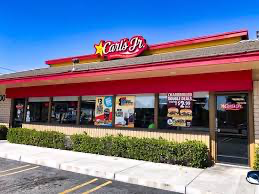
From a Hot Dog Cart to Two National Brands
Carl’s Jr. traces its roots back to 1941 when Carl Karcher and his wife Margaret borrowed money against their car to purchase a hot dog cart in Los Angeles. The small stand became successful enough that the couple opened several drive-in restaurants before launching the first Carl’s Jr. in 1956.
Hardee’s followed a similar entrepreneurial path. Wilber Hardee opened the first restaurant in Greenville, North Carolina, in 1960 with the goal of serving high-quality burgers quickly and efficiently. The chain expanded rapidly throughout the Southeast and Midwest, becoming one of the country’s fastest-growing restaurant companies.
For years, the two businesses operated independently. That changed in 1997 when CKE Restaurants acquired Hardee’s. Rather than eliminating one of the brands, CKE chose to keep both names while sharing recipes, marketing strategies, supply chains, and operational systems.
This approach allowed each chain to maintain decades of local customer loyalty while benefiting from the efficiencies of operating as one larger company. Today, Carl’s Jr. and Hardee’s continue expanding internationally while remaining familiar names throughout much of the United States.
My Go-To Order
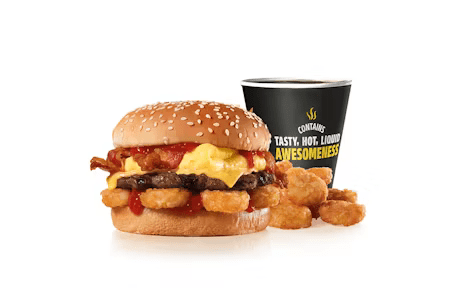
When diving into a business, you’ve got to taste the product, right? Here are the items I usually order and why they’ve become customer favorites.
Famous Star with Cheese: This is usually my order because it represents Carl’s Jr.’s flagship burger. Signature products like this become the face of a brand and give customers something they immediately recognize.
Hand-Breaded Chicken Sandwich: Both brands have invested heavily in premium chicken offerings to compete in one of fast food’s fastest-growing categories. Offering quality alternatives beyond burgers helps attract a broader customer base.
Natural-Cut Fries: Side items may seem simple, but consistency matters. Strong supporting menu items improve the overall customer experience and encourage repeat visits.
Chocolate Shake: Desserts and beverages help increase average ticket sizes while rounding out the meal, making them valuable contributors to restaurant profitability.
Overall, my order reflects the company’s strategy of offering premium fast food without straying too far from its core identity.
The Business Behind the Billions
Growing Through Acquisition Instead of Starting Over
Many companies assume growth requires building new brands from the ground up. CKE Restaurants chose a different approach by acquiring Hardee’s and allowing both chains to continue operating under their existing names.
The acquisition preserved decades of customer loyalty while eliminating many of the costs associated with introducing an entirely new brand. Businesses can often grow faster by strengthening established companies rather than replacing them.
Maintaining Regional Brand Loyalty
Carl’s Jr. enjoys stronger recognition across the western United States, while Hardee’s has deep roots throughout the South and Midwest. Rather than forcing customers to adopt a single national identity, the company embraced these regional preferences.
Understanding local markets is an important competitive advantage. Customers often develop emotional connections with familiar brands, and preserving those relationships can be more valuable than pursuing complete uniformity.
Competing Through Premium Positioning
Instead of competing solely on low prices, Carl’s Jr. and Hardee’s frequently emphasize larger burgers, premium ingredients, and made-to-order products. This strategy allows the restaurants to justify slightly higher prices while appealing to customers seeking a more substantial meal.
Premium positioning isn’t about being the most expensive option. It’s about giving customers enough additional value that paying a little more feels worthwhile.
Continuously Refreshing the Menu
The company regularly introduces limited-time burgers, chicken sandwiches, and seasonal promotions. These products generate excitement, encourage repeat visits, and provide opportunities to test new ideas before making permanent menu additions.
Businesses that continue experimenting often discover successful products that become long-term staples while keeping customers interested in what’s coming next.
Scaling Operations Behind the Scenes
Although Carl’s Jr. and Hardee’s have different names, much of their purchasing, supply chain management, menu development, and restaurant operations are shared. This creates economies of scale that reduce costs while allowing both brands to benefit from collective resources.
Customers may never notice these operational efficiencies, but they play a significant role in improving profitability across thousands of restaurants.
Lessons From Carl’s Jr. & Hardee’s for Aspiring Entrepreneurs
Strategy | What It Teaches |
|---|---|
| Strategic Acquisitions | Buying established businesses can accelerate growth. |
| Regional Branding | Local customer loyalty is an asset worth protecting. |
| Premium Positioning | Higher quality can justify higher prices. |
| Continuous Innovation | New products keep customers engaged. |
Final Thoughts
Carl’s Jr. and Hardee’s demonstrate that successful businesses don’t always need to operate under a single name to achieve national scale. By preserving regional identities while combining operational resources, the two brands created a business model that balances familiarity with efficiency.
Their story also highlights the importance of adapting without abandoning what made each company successful in the first place. Rather than forcing dramatic change, CKE Restaurants built upon decades of customer trust while improving the business behind the scenes.
For entrepreneurs, one lesson stands out clearly. Growth isn’t always about starting something new. Sometimes the greatest opportunities come from recognizing the value that already exists and finding smarter ways to help it reach its full potential.
Want more bites of business?
Subscribe to get every new post delivered straight to your inbox.
Sources:
- CKE Restaurants – Our Brands (Carl’s Jr. & Hardee’s)
- Carl’s Jr. – Our Story
- Hardee’s – Our Story
- Encyclopaedia Britannica – Carl Karcher
- Restaurant Business – Carl’s Jr. & Hardee’s News
- QSR Magazine – CKE Restaurants Coverage
- Forbes – CKE Restaurants & Carl’s Jr. Coverage
- Entrepreneur – Carl’s Jr. Franchise Profile
- Technomic – Restaurant Industry Insights
- Statista – Carl’s Jr., Hardee’s & CKE Statistics


Leave a Reply